Why I Stopped Buying the Cheapest Resin (And Why You Should Verify Before You Buy)
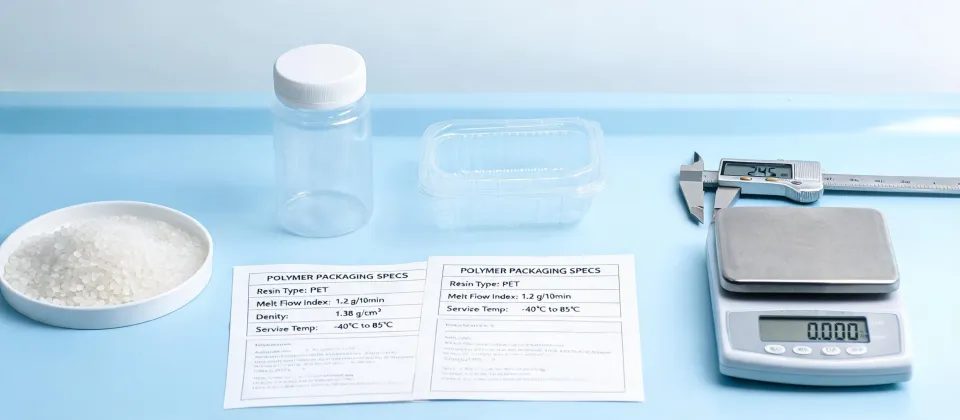
I Think Buying the Cheapest Resin is a Costly Mistake
Let me just say it outright: if you're sourcing plastic parts or raw materials and your first instinct is to hunt down the lowest per-pound price, you're probably leaving money on the table. I've been managing procurement for a mid-sized B2B manufacturer for about six years now, overseeing an annual budget of around $180,000 for resins, finished plastic components, and custom molding services. And I've learned this the hard way, more than once.
The conventional wisdom in our industry is that resin is a commodity—buy on price, and you'll be fine. I don't buy that anymore. My experience has shown me that the cheapest option almost always carries hidden costs that blow up your total cost of ownership (TCO). And the fix isn't complicated: it's about verifying what you're actually getting before you commit.
My Argument: Verification is the Cheapest Insurance You Can Buy
Here's the core of what I believe: spending 15 minutes upfront to verify a material's specifications or a supplier's claims will save you days—sometimes weeks—of costly rework, missed deadlines, and strained client relationships.
I get it. In a fast-paced production environment, stopping to check seems like a disruption. But I've tracked every single order we've placed over the past 6 years in our ERP system. After analyzing 200+ orders, I found that about 12% of our budget overruns—roughly $8,000 annually—came directly from problems that could have been caught with a simple verification step. That's a lot of money for a process that takes less than an hour.
Hidden Cost #1: The "Compatible" Resin That Wasn't
Take a specific example from Q2 2023. We were sourcing a run of plastic buckles for a commercial client. The spec called for a standard polypropylene (PP) with specific impact resistance. A new vendor quoted us a price that was 15% lower than our incumbent supplier. The material was listed as "PP equivalent." I almost signed off on it.
But our team had a policy I'd implemented after a similar disaster two years prior: any new material source requires a simple melt flow index (MFI) test and a basic impact check. We asked the vendor for a sample. Long story short, the "PP equivalent" had an MFI that was off by 30%. It would have resulted in brittle parts under moderate stress. The rework—if we hadn't caught it—would have cost us an estimated $4,200 in wasted material and labor, plus a potential late fee from our client. The test cost us $150 and took one day.
What most people don't realize is this: "Equivalent" in a supplier's catalog doesn't mean identical. It often means "close enough for most applications." But "most applications" isn't the same as your application. That's a risk I'm not willing to take on a $4,200 contract.
Hidden Cost #2: The Epoxy Resin That Cured Too Fast
Another classic example involves epoxy resin for a silicone mold project. We needed a slow-curing epoxy for a complex mold. The cheapest option from a new supplier promised a 45-minute pot life. We trusted the data sheet without verifying.
Spoiler: the actual pot life, under our shop conditions (around 75°F), was closer to 20 minutes. We ruined the first pour—lost about $600 in material and 8 hours of labor on mold prep. That 'cheap' epoxy ended up costing us nearly $1,100 when you account for the wasted material and the overtime needed to re-do the pour.
Here's something vendors won't tell you: Published technical data sheets are often based on idealized lab conditions. Your actual shop temperature, humidity, and mixing equipment can all change the material's behavior. The only way to know is to test a sample under your own conditions. (We now have a written policy requiring a small batch test for any new epoxy or resin before it goes into production. It's saved us from at least two more similar disasters since then.)
The Problem with Assuming You Know Your Plastic
Let's talk about polypropylene specifically, since it's one of the most common plastics and a frequent source of confusion. A client once asked me, "how to identify polypropylene plastic" because they were getting parts that looked like PP but felt different.
The cheaper supplier's parts were indeed made from PP—but not the grade specified. They had used a general-purpose, low-impact PP instead of the copolymer grade our design required. If you don't know the specific tests (like the density test, where PP floats in water, or the burn test, which for PP smells like candle wax), you can't tell the difference. But the performance difference in a load-bearing application is night and day.
People think that if a plastic is labeled "Polypropylene," it's all the same. That assumption is the biggest cause of parts failure I've seen. The basic material type is just the starting point. You need to understand the specific grade, the additive package, and the processing history—none of which are visible on a finished part.
Responding to the Pushback
I know what some of you are thinking: "This sounds like a lot of extra work for small orders." Or, "We don't have the in-house capability to run these tests." To be fair, those are valid concerns for some operations.
But I'd argue that the cost of a single failure—lost product, missed deadlines, a damaged client relationship—far outweighs the cost of a simple verification protocol. You don't need a full lab. Even a basic checklist—like confirming MFI, doing a quick burn test, or asking for a certificate of analysis (CoA)—catches the most common mismatches.
Also, this doesn't have to be complicated. The 12-point checklist I built after my third mistake has literally saved us an estimated $8,000 in potential rework. It takes about 20 minutes for a new material. That's cheaper than any insurance policy you'll find.
My Final Take: Buy with Confidence, Not on Hope
I'm not saying you should never consider lower-cost suppliers. We've switched vendors and saved money when we did our homework. But I am saying that buying on price without verification is a gamble. Over the past six years of tracking every invoice and every material batch, I can tell you with confidence: the cheapest unit price almost never leads to the cheapest total cost. The difference between a good deal and a disaster is the 15 minutes you spend verifying what you're buying.
I can only speak to my own experience in a mid-size B2B manufacturing context with fairly predictable ordering patterns. If you're a high-volume operation with rigorous incoming quality control, your mileage may vary. But if you're like us—small enough that a $4,000 rework order stings—you should take a hard look at your verification process. It's the best investment you'll make this year.