Emergency Plastic Resin Sourcing: A 6-Step Checklist for Tight Deadlines
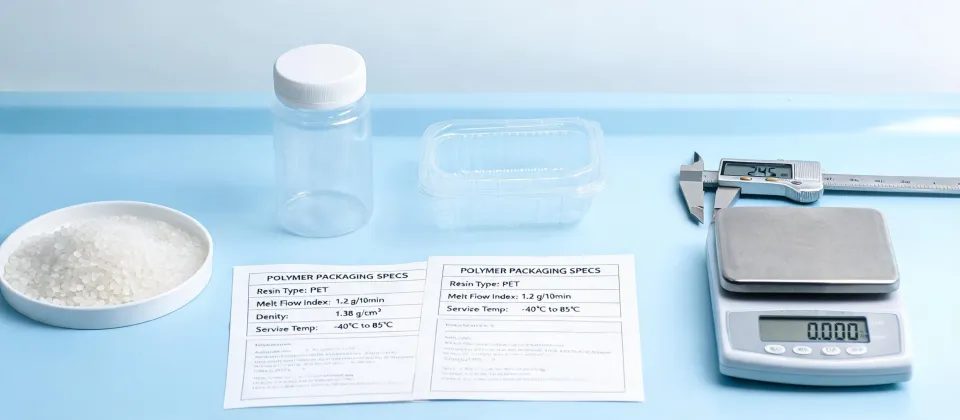
When a client calls at 4 PM on a Thursday needing polypropylene resin delivered by Tuesday morning, you don't have time to "figure it out." You need a process.
In my role coordinating material procurement for a plastics supplier, I've handled 200+ rush orders over the past seven years—for injection molding shops, fencing contractors, even a water treatment plant that needed a specific polyethylene grade in 72 hours. This checklist is what actually works when the deadline is real and waiting isn't an option.
Is This Actually an Emergency?
Here's a misconception worth clearing up: half of the "emergencies" I've dealt with weren't genuinely urgent. They were unplanned. The client could have waited two weeks but wanted materials in three days because that's when their project landed. That's fine—but it changes how you approach the order.
This checklist is for genuinely tight timelines. If you have 5+ business days, follow a normal procurement process and you'll likely get better pricing. If you have less, keep reading.
The 6-Step Emergency Sourcing Checklist
Step 1: Lock the Specification Before Calling Anyone
I can't stress this enough. The biggest time-waster in an emergency is the back-and-forth that happens when someone asks for "polypropylene" without specifying grade, melt flow rate, or additive package.
It's tempting to think you can just say "PP resin" and get what you need. But polypropylene isn't one product—it's a family. Homopolymer vs. copolymer, talc-filled, UV-stabilized, food-grade... these aren't marketing distinctions. They affect how the material performs in your application.
Before making a single call, write down:
- Exact material type and grade (e.g., PP homopolymer, MFI 12)
- Quantity required, plus a 5-10% buffer
- Delivery deadline and destination
- Required certifications (food contact, UL rating, etc.)
If you don't know the grade, ask for help. A compounding engineer or an experienced supplier can often reverse-engineer a spec from your application and existing parts—but they need time to do it right.
Step 2: Call Your Existing Supplier First
This is counterintuitive, and I've seen a lot of procurement people skip it. They assume that because the order is urgent, they need a new vendor with "rush capabilities." But your existing supplier already has your specs and billing on file. If they have inventory, they can move faster than a new relationship ever could.
In March 2024, I watched a client burn 36 hours cold-calling resin distributors before finally calling their regular supplier—who had exactly what they needed in a regional warehouse 200 miles away. They paid a small expedited freight fee, not a panic premium.
Call your primary contact, explain the situation honestly, and ask two questions:
- Do you have this grade in stock right now?
- What's the fastest confirmed delivery you can commit to?
Don't ask "Can you help?" It's too vague. Get concrete answers. If you've ordered jsp resins or other thermoplastics from this supplier before, your rep likely has your material history on file and can check stock immediately.
Step 3: Build a "Good Enough" Spec
This is where expertise pays off. In an emergency, you might not get the exact grade you normally use. The question is: what can you substitute without compromising the part?
People think the tightest spec always gives the best result. Actually, over-specifying is a common cause of emergency failures. A food-contact grade for a non-food application? UV-stabilized material for an indoor part? You might be paying a premium and limiting your options for no reason.
By the way, this is a good time to clarify a basic material question that comes up constantly: what type of plastic is polyethylene? Polyethylene (PE) is a thermoplastic polymer—the most common plastic in the world, in fact. It comes in several densities (HDPE, LDPE, LLDPE) and is used in everything from plastic mesh fencing to food packaging. When you're sourcing in a rush, knowing which type you actually need (HDPE for rigid outdoor fencing, for example) prevents costly substitution errors.
Step 4: Calculate Total Cost—Not Just Unit Price
It's tempting to compare unit prices between vendors and pick the cheapest. That's almost always the wrong move in an emergency. The real number is total landed cost:
- Material price
- Expedited freight (can double shipping cost)
- Rush fees or minimum-order penalties
- Handling or warehouse charges
- The cost of getting it wrong (a rework cycle puts you even further behind)
Real example: late last year, a client needed 2,200 lbs. of HDPE resin for a municipal plastic mesh fencing job. Vendor A quoted $0.89/lb with delivery "estimated" in 7-10 days. Vendor B quoted $1.04/lb with guaranteed delivery in 3 days. The client almost chose Vendor A to save roughly $330. But the project's penalty clause was $1,500 per day of delay. Vendor A's estimate wasn't a guarantee—if it slipped two days, the "savings" vanished.
They went with Vendor B. The project delivered on time. The $330 was never worth the risk.
For reference, commodity thermoplastics pricing in early 2025 has been roughly $0.75-0.95/lb for PP homopolymer in bulk, $0.65-0.85/lb for HDPE, and $1.60-2.20/lb for polycarbonate depending on grade and volume. These numbers fluctuate with feedstock prices, so verify current rates before you budget.
Step 5: Get a Written Time Commitment, Not a Quote
A quote with a price but no confirmed delivery date is not a commitment. In a rush, I need three things in writing:
- Confirmed inventory ("we have it in stock"—not "we can probably source it")
- Confirmed delivery date, not a ship date
- Tracking number once it's picked up
If a supplier hesitates on any of these, move on. I've tested six different rush-fulfillment options over the years, and the vendors who give explicit time guarantees are the ones who hit them. The ones who say "should be fine" are the ones who fail.
Step 6: Have a Plan B—and Know When to Use It
Most people skip this step because it feels like admitting defeat. But the best emergency buyers always have a backup. Your Plan B might be:
- A different grade that's functionally acceptable
- A regional distributor with local inventory
- A part redesign using a more available material
- A different process (thermoforming instead of injection molding, for example)
Our team lost a $27,000 contract in 2022 because we tried to save $400 by skipping Plan B on a custom molding run. The primary material got held up in customs, we had no fallback, and the deadline slipped. It wasn't the $400 that lost us the contract—it was the absence of a backup plan.
Common Mistakes That Make Emergencies Worse
Mistake 1: Contacting Too Many Vendors
This sounds wrong, but I've seen procurement teams burn a full day collecting quotes from eight suppliers, only to create a bidding war where nobody's motivated to move fast. In an emergency, pick two or three qualified suppliers, tell them it's competitive, and give them a two-hour window to respond.
Mistake 2: Trusting Verbal Promises
I have mixed feelings about this. On one hand, relationships matter—a supplier I've worked with for years deserves the benefit of the doubt. On the other, I've seen schedules blow up because a "trusted" source said "don't worry, we'll get it there" without actually checking inventory. The fix is simple: ask for written confirmation. A confident supplier won't mind sending it.
Mistake 3: Forgetting the Freight Leg
The material might be ready in 24 hours, but if freight takes four days, you've gained nothing. Always ask about shipping explicitly. In many areas, expedited LTL freight is harder to secure than the material itself.
The Value of Knowing Your Limits
Here's a counterintuitive thought: a good supplier will sometimes tell you that you don't need rush service. That's rare. But it's also the right call when you're ordering standard-grade PP resin for a project with flexible timing. Paying 25-50% more for expedited service that doesn't change your critical path is just burning money.
The vendor who once told me "this isn't our strength—here's who does it faster" earned my trust for everything else. Same goes for the consultant who says "your timeline is actually fine; let's not rush." That's credibility, and it's worth more than a low price.
The Bottom Line
Emergency sourcing comes down to decisions, not speed. Make them in the right order, with the right data, without panicking. Whether you're ordering from the jsp store or a regional distributor, the principles are the same: lock your spec, call your existing contacts first, calculate the real cost, get commitments in writing, and never skip the backup plan.
The checklist looks simple, because it is. But following it consistently will save you more time and money than any "secret" supplier relationship ever could.