Plastic or Resin? A Field Guide for Four Common Scenarios
There's no single right answer when someone asks me "which plastic should I use?" or "will this resin work?" I used to think there was. I don't anymore.
I handle material and replacement part orders for a plastics company. Let me be upfront about my bias there. But the honest truth after eight years in this business is that the right answer depends on which scenario you're in. I've made and documented fourteen significant mistakes, totaling roughly $18,000 in wasted budget. This article is the field guide I wish I'd had before those mistakes added up.
Most questions I get fall into one of four categories:
- Industrial replacement parts. Function matters more than looks.
- Craft-scale resin casting. Earring molds, pyramids, jewelry, decorative pieces. Looks matter more than function.
- Painting plastic. And the question underneath: will acrylic paint stick to plastic or not.
- Time-critical orders. A fixed deadline that won't move and you need material in hand.
Each of these has a different answer. Here's what I've learned the hard way.
Scenario One: The Replacement Part Problem
Here's the mistake that cost me the most. Back in 2022, a client needed replacement plastic parts for a food processing line. The original parts were polypropylene. The client's procurement team found an alternative that was $540 cheaper per batch.
I flagged it. The data sheet wasn't quite right — the flexural modulus was lower, and the melting point was close but not identical. Still, the parts looked identical. They ordered 1,200 pieces.
Every single one failed within three weeks of chemical exposure. $3,200 straight to the trash, plus a shutdown that cost way more than any of us wanted to admit.
The lesson: "identical-looking" and "identical-performing" are two different things. When you're replacing an industrial part, the material spec is the entire game.
What to do instead
- Ask for the material data sheet before you order anything.
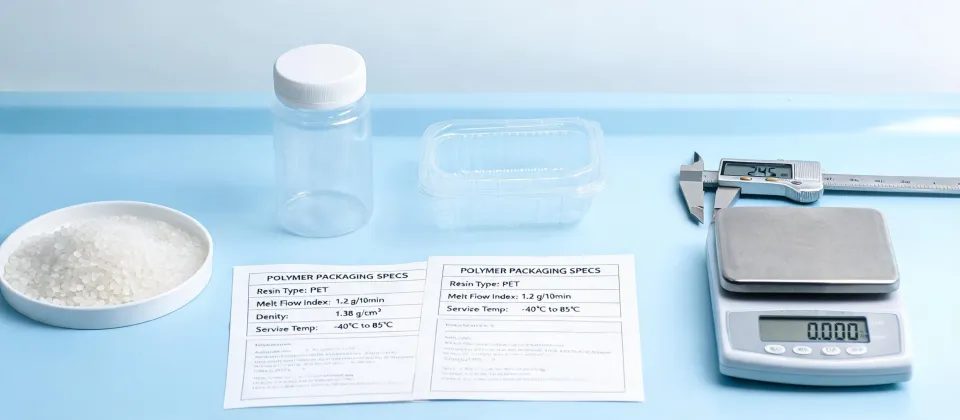
- Compare temperature resistance, chemical compatibility, and flexural strength — not just the color.
- Ask about the process: injection molding and thermoforming produce different results even from the same resin.
- Work with a supplier that has a broad portfolio. One of the reasons I point people toward jsp resins llc is practical: we keep polypropylene, polycarbonate, HDPE, and polyurethane on hand, so nobody gets steered to a "close enough" substitute.
To be fair, budget suppliers aren't always wrong here. They can make you a part. But they can't always tell you exactly what's in it. That's a red flag for replacement work.
Scenario Two: Resin for Craft and Casting
On the opposite end, we get a lot of questions about resin for small projects — resin earring molds, decorative pyramids, coasters. Different world entirely.
My most embarrassing mistake here happened in 2021. I had a batch of resin pyramid molds that looked perfect on the outside. Clear surface, no bubbles. But the centers were soft, almost clay-like. The issue: wrong slow-cure ratio for the pour depth. I'd mixed by volume instead of by weight, and the deeper sections of the pyramid didn't cure evenly.
$680 of resin went straight into the trash. (Note to self: never skip the scale.)
What matters in this scenario
- Match the resin to your pour thickness. Deep pours need a slow-cure formula so heat doesn't build up and cause crazing.
- Measure by weight, not volume. Epoxy components have different densities — measuring by volume is how you get off-ratio mixes.
- Temperature controls everything. A cold workshop can extend cure time by hours.
- Buy from whoever tracks the batch. If you use the jsp login portal, you can pull the lot number for every resin order, which makes troubleshooting way easier when something does go wrong.
Granted, this requires more setup than most craft guides admit. But the extra five minutes of weighing saves the two hours of scraping failed casts out of silicone molds.
Scenario Three: The Paint Question
"Will acrylic paint stick to plastic?"
One of the most common questions we get. Short answer: it depends on the plastic. Long answer: this is where the mistakes happen.
Two plastics cause most of the problem: polypropylene (usually marked #5) and HDPE (#2). They're low surface energy plastics. Paint has nothing to grab onto. Without prep, your paint dries and then peels off in sheets. I know this from a 2023 job where I painted 47 polypropylene parts with acrylic. They looked fantastic for about a day. Then they looked like I'd left them in the rain.
The numbers said it should work — the paint label said "for plastic." My gut said something was off because I hadn't checked the resin type. My gut was right. (I really should listen to it more.)
ABS and polycarbonate, on the other hand, are more forgiving. Acrylic can work on them if you clean the surface and scuff it lightly with fine sandpaper.
What to do instead
- Check the resin code on the part before you buy paint.
- For polypropylene and HDPE: sand with 400-grit, wipe with isopropyl alcohol, use a plastic adhesion promoter.
- For ABS and polycarbonate: clean with soap and water, scuff lightly, then paint.
- Test on a scrap piece first. Every time. I don't care if it's a one-off project.
This isn't about one plastic being "better" than another. Polypropylene is great for chemical resistance — that's why it's everywhere in food and medical applications. But it hates paint. Know the material, then choose your prep.
Scenario Four: The Deadline That Won't Move
I have mixed feelings about rush fees. Part of me thinks they're a money grab. Another part has seen the operational chaos rush orders cause. But one thing I know for sure: in urgent situations, the certainty of delivery is worth paying for.
In March 2024, we paid $400 extra for rush delivery on replacement parts. The alternative was a client missing a $15,000 event. That $400 bought certainty. The "much cheaper" option had an estimated delivery that could have slipped by three or four days.
Cheap with a vague date isn't cheap. It's a gamble with a large downside. If you're accountable for the end result, an uncertain promise is the most expensive product you can buy.
When to pay for speed
- The event date can't move. Trade show, production launch, repair deadline.
- Your client won't accept a partial delivery.
- You've been burned by "estimated" dates before.
In this scenario, confirm what "guaranteed" actually means. Is it in writing? Does it cover re-shipping if the first delivery misses? Can you track the order? That's why I use the jsp login portal for time-sensitive orders — I can see production status without waiting for someone to reply to an email.
Bottom line: if you can absorb a one-week delay, buy the cheap option. If you can't, pay for certainty. That's not a sales pitch. It's the difference between $400 and $15,000.
Which Scenario Are You Actually In?
Here's the part most advice skips: how to classify your own project. It's not always obvious. Four questions to ask yourself:
- Does the part bear load or see chemicals? Yes — Scenario One.
- Is it a small decorative project? Earrings, keychains, paperweights. Yes — Scenario Two.
- Are you painting or clear-coating it? Yes — Scenario Three. Find the resin code before you buy paint.
- Is the deadline fixed? Yes — Scenario Four. Budget for expediting and track the order.
Some projects hit multiple scenarios. An industrial part you need fast, painted, for a fixed event is scenarios one, three, and four at once. That's fine. The point is to know which one is driving the decision.
The $18,000 Checklist
I've made the mistakes so you can skip them. The $18,000 was my tuition. This is the course material:
- Ask for the material data sheet on any replacement part.
- Measure resin by weight, not volume. Control the temperature.
- Check the resin code before painting. Prep accordingly.
- When the deadline is fixed, pay for certainty. It's cheaper than missing the date.
I don't have hard data on how many projects fail from these specific mistakes, but based on our order history, my sense is that around 15% of first-time orders hit at least one of these issues. That's a lot of wasted time and money. Be the person who checks before ordering, not after.
If you're not sure which scenario fits, ask. That's what the jsp login is for. Or just call and talk to a human. Tell them what you're making, what it's for, and when you need it. A good supplier will tell you which scenario you're in before they tell you what to buy.