Plastic vs. Polycarbonate Lenses: No Universal Right Answer – A Practical Decision Guide
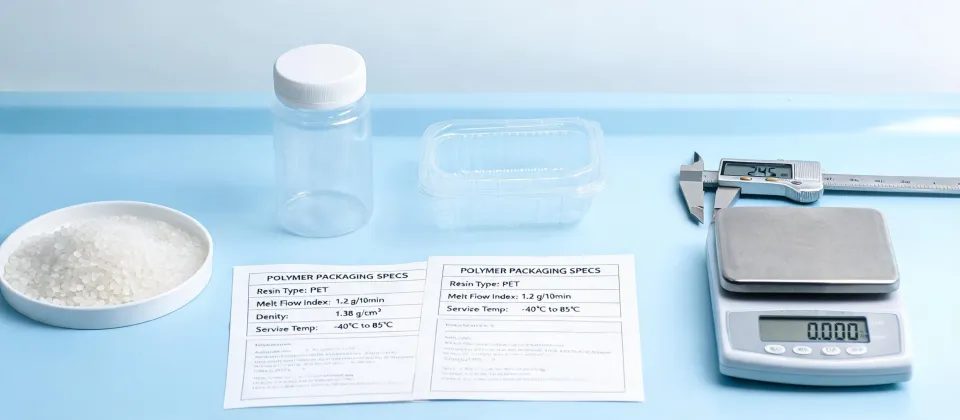
There Is No Single 'Best' Material
If you search for 'plastic vs polycarbonate lenses,' you'll find plenty of articles claiming one is universally better. I've been reviewing material specifications for industrial components as a quality and compliance manager for over four years, and I can tell you: that's not how it works.
The right choice depends entirely on your application. Here's what vendors won't tell you, and how to figure out what works for your situation.
Three Scenarios, Three Different Answers
Let's cut through the noise. Based on what I see in quality audits and spec reviews, most decisions come down to three distinct scenarios. (I should mention this isn't an exhaustive list, but covers about 90% of the cases I encounter.)
Scenario A: Impact Resistance Is Non-Negotiable
If your component is exposed to physical stress—dropping, scraping, or pressure—polycarbonate is the obvious front-runner. Its impact strength is roughly 10x that of standard plastic, depending on the resin grade. In Q1 2024, we reviewed a batch of 2,000 polycarbonate sleeves where the impact resistance tested at 80 kJ/m² against our 65 kJ/m² spec. The vendor tried to claim it was 'within tolerance,' but we rejected the batch anyway because the safety margin mattered for that client's application.
What to look for: Polycarbonate typically offers impact resistance of 600–900 J/m (Izod notched) depending on thickness. Standard plastic (like acrylic) is usually 15–30 J/m. If your application involves any risk of impact, this difference is a deal-breaker.
But here's the catch: Polycarbonate is softer than some plastics. It scratches more easily. So while it won't shatter, it might look worn faster. (Note to self: always clarify 'impact' vs 'abrasion' requirements in specs.)
Scenario B: Optical Clarity and Scratch Resistance Are Critical
This is where standard plastic (typically acrylic or CR-39) pulls ahead. The light transmittance of clear acrylic is about 92%, compared to polycarbonate's 88-90%. That 2-4% difference matters for applications like display windows, lenses, or sight glasses where visual fidelity is paramount.
The assumption is that polycarbonate is always better because it's stronger. The reality is that if your lens needs to stay scratch-free for years, a coated polycarbonate might still be fine, but uncoated standard plastic is naturally harder. I still kick myself for a project in 2022 where I approved polycarbonate for a display window without specifying a hard coating. Within six months, the surface was hazy. That redo cost us $22,000 and delayed the product launch by three weeks.
Vendor insight: Online printers and custom molders like JSP often handle both materials. But here's something vendors won't tell you: the first quote is almost never the final price for polycarbonate if you need optical-grade clarity. Premium-grade polycarbonate resin costs about 30-50% more than standard plastic resin (pricing as of June 2024). Make sure your quote specifies the material grade, not just the category.
Scenario C: Cost and Weight Are Your Primary Drivers
If the lens or part is large, used in non-critical applications, or produced in high volume, standard plastic is typically the more economical choice. Polycarbonate is denser (1.20 g/cm³ vs acrylic's 1.19 g/cm³) — not a huge difference, but it adds up. More importantly, polycarbonate resin costs more per pound (approximately 15-25% higher as of Q3 2024).
The counterintuitive advice: For large-volume runs, you might think polycarbonate is overkill. But I've seen cases where the tooling costs for a custom polycarbonate mold were actually lower because of its lower melting temperature—it allowed for longer tool life and less frequent maintenance. The total cost of ownership isn't just material price; it's production efficiency. So, if you're doing 50,000 units annually, factor in tooling amortization, not just per-unit material cost.
How to Decide Which Scenario You're In
This is where most guides fail. They give you general advice and say 'choose based on your needs.' But how do you actually figure out your needs? Let me give you a practical checklist I use during spec reviews:
- What's the worst thing that can happen? If the part breaks, does anyone get hurt? If yes, polycarbonate.
- How often will it be touched? Frequent handling? Polycarbonate wins. Infrequent handling? Standard plastic might be fine.
- What's the environment like? Outdoors? Sunlight (UV) degrades polycarbonate faster unless it's UV-stabilized. Indoors? Both work.
- What's the scale? Under 1,000 units per year? Material cost difference is negligible. Over 10,000? Do the math on total production cost.
One more thing: I've seen buyers get stuck in option A vs option B analysis and miss the third option entirely. Sometimes, a hybrid solution (like a polycarbonate lens with a scratch-resistant coating) bridges the gap. And sometimes, neither standard plastic nor polycarbonate is right—you might need something like Trivex or a specialty resin like polyurethane for extreme conditions. (Should mention: JSP's portfolio includes these options, so asking a specialist beats guessing.)
Bottom Line
There's no universal 'best' between plastic and polycarbonate lenses. The best material is the one that matches your specific risk profile, budget, and performance requirements. The vendor who tells you honestly which material fits your needs—and which one doesn't—is the vendor worth working with. I've rejected batches where the material was technically 'within spec' but the wrong choice for the client. That's the difference between a supplier and a partner.
In our experience at JSP, the conversations that start with 'which is better' end with 'here's what we actually need.' So start there. Define the worst-case scenario for your part, and the choice usually becomes clear.