Is Resin a Plastic? A Quality Inspector’s Guide to Aftermarket Plastic Replacement
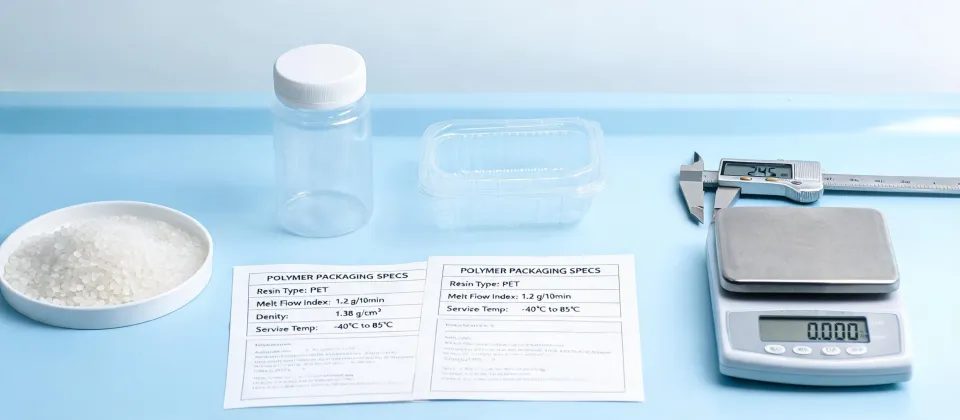
I’m the quality and brand compliance manager at jsp, a company that produces industrial thermoplastics, synthetic polymer resins, and custom-molded replacement parts. I review roughly 200 unique product runs a year before they ship. In our Q1 2024 audit, I rejected 6% of first deliveries — usually because the material documentation didn’t support what the sales order promised.
If you’ve ever had to replace a plastic part that’s no longer made, you know the drill: hunt for a compatible listing, pay too much for shipping, and hope it holds up. But there’s a more basic question customers rarely ask: is resin a plastic?
The short answer is yes. The useful answer is more nuanced. Resin is the raw polymer material. Plastic is what you get after resin has been heated, formed, cooled, or cured. When you buy an aftermarket replacement, you’re not just buying a shape — you’re buying a material history. If nobody can tell you which resin was used, the shape is all you’ve really specified.
So here’s the comparison I use in my own work: OEM replacement parts versus custom-molded aftermarket parts made from a known resin. I’ll walk through four dimensions: material traceability, part-to-part consistency, dimensional fidelity, and total turnaround.
Dimension 1: Material Traceability
When you order an OEM replacement part, what do you actually get? A part number, a price, and a promise. The exact resin grade is usually not on the invoice. That matters because two parts can look the same and fail very differently under heat, UV, chemicals, or repeated impact.
The custom route starts from the opposite end. At jsp, we supply materials in several forms — pellet, powder, and liquid resin systems for casting or low-pressure molding. For molded replacements, we identify the synthetic polymer resin before anything else: polycarbonate, polypropylene, HDPE, polyurethane, or a nylon blend. Then we match it to the part’s operating conditions.
I’m not a polymer chemist, so I can’t speak to the molecular-level formulation that happens in our lab. But from a quality perspective, material traceability is straightforward: can you name the resin, and can you prove that the part was actually made from it? In custom molding, the answer is documented with material certificates and traceable batch codes.
And yes, the same logic applies to green claims. If someone markets a resin as recyclable, the FTC Green Guides under 16 CFR Part 260 require that the claim be truthful and backed by the recycling infrastructure reality. That’s the same evidence bar I use for any material claim.
The conclusion here: if you care about what your replacement part is actually made of, a documented resin beats an unspecified OEM standard material.
Dimension 2: Part-to-Part Consistency
The second dimension is consistency. People assume OEM parts are automatically consistent. They’re usually good, but OEMs update materials and revise tooling without broadcasting it. I learned this the hard way.
In my first year at jsp, I approved a batch of OEM replacement parts that looked identical to the original run. They weren’t. The OEM had changed the impact modifier, and the parts cracked during installation. That issue cost us several thousand dollars and delayed a client’s launch. Since then, I’ve treated material verification as seriously as dimensional inspection.
In custom molding, consistency is driven by process control. Every run at jsp is tied to a specific resin lot and a machine log. If a customer asks which batch produced their parts, we can pull the record. That kind of traceability is rare in OEM replacement channels, especially after a part has been discontinued.
The conclusion here: consistency is not guaranteed by a brand badge. It’s guaranteed by controlled material and process documentation.
Dimension 3: Dimensional Fidelity
Next is dimensional fidelity. OEM parts come from engineered tooling, but that tooling wears. By the time a part is in the replacement channel, the dimensions can be off. A custom molder can measure the original part and build a replacement against a verified reference model.
We do this routinely at jsp. When a customer sends us a worn or broken part, we scan it, rebuild the geometry in CAD, and check the critical tolerances before molding. The final parts get dimensional reports showing measured values against nominal specs.
One caveat: if nobody measures the original part, custom molding can be just as sloppy as anything else. The answer is not OEM vs custom. The answer is insisting on a dimensional report, whatever route you choose. If a supplier says it’ll fit, ask them to show you the numbers.
The conclusion here: measure the part, don’t guess the part.
Dimension 4: Turnaround and Total Cost
The fourth dimension is the one that pushes most customers toward custom molding: time.
An OEM replacement part goes through a long supply chain. If it’s in stock, fine. If it’s not, you wait weeks or months. For discontinued parts, the wait can be indefinite.
Custom molding from resin shortens that path. Once the mold is set, we can produce 50 or 500 parts in days, not months. Recently, a customer needed 400 obsolete components. The OEM quoted 11 weeks. The spreadsheet said that was acceptable. My gut said it wasn’t — so we moved production in-house, molded the parts from a verified polypropylene resin, and delivered them in three weeks, including full inspection.
That’s the efficiency as competitiveness argument I’ve come to believe in. The unit price may not beat a mass-produced OEM part, but total cost includes downtime, accelerated freight, and the risk of repeating the sourcing cycle.
The conclusion here: if time is money, reducing a replacement lead time from 11 weeks to 3 can save more than the parts cost.
Scenario-Based Recommendation: OEM or Aftermarket?
So, which should you choose?
Stay with OEM when:
- You need certification status (UL, CSA, OEM part warranty) that only an original manufacturer can provide.
- Your volumes are high enough that custom tooling isn’t justified.
- You don’t want to create acceptance specs; you trust the OEM to manage material.
Choose custom molding when:
- The original part is discontinued, or its lead time is hurting your operation.
- You need lower quantities than the OEM minimum.
- You want documented control over the synthetic polymer resin and its suppliers.
- You’d like to upgrade the material — for example, replacing a plain HDPE part with impact-modified polypropylene.
There’s also a hybrid path. We frequently reverse-engineer an existing OEM part, use it as the reference model, and mold replacements under the jsp manufacturing aftermarket plastic replacement program. That gives customers the convenience of a direct replacement with better material documentation than the original channel provides.
I should add that I’m not a compliance attorney, so I can’t tell you when a certification obligation forces an OEM purchase. What I can tell you is that from a quality evidence viewpoint, the same rule applies everywhere: ask for material certs, batch numbers, and dimensional reports. If those documents don’t exist, you’re buying hope.
Bottom Line: Resin vs. Plastic Is More Than a Definition
Is resin a plastic? Yes — but resin is also the starting point and plastic is the final form. That distinction matters when you’re choosing a replacement part. A part made from a documented resin, with traceable batch control and measured dimensions, is an engineering decision. An unspecified alternative is a gamble.
At jsp, I review every delivery against one standard: can I verify the material, the process, and the measurements? If I can’t, it doesn’t ship. Whether you buy an OEM part, a custom-molded aftermarket part, or a hybrid solution, hold your supplier to the same standard.
That’s the better way to ask is resin a plastic. Ask instead: what resin, what batch, and what proof?