How to Buy Resin Pellets Without Getting Burned: A Cost Controller's Checklist
-
When to Use This Checklist
-
The Checklist
-
Step 1: Define the Exact Material Spec Before You Contact Anyone
-
Step 2: Compare Total Cost of Ownership, Not the Per-Pound Price
-
Step 3: Validate Traceability and Paperwork Before the Order Ships
-
Step 4: Run a Trial Batch Before You Commit to Full Volume
-
Step 5: Ask About Moisture Sensitivity and Shelf Life
-
Step 6: Verify the Supplier's Quality System, Not Their Sales Pitch
-
Step 7: Qualify a Backup Supplier Before You Actually Need One
-
Step 8: Log Every Order So Patterns Become Visible
-
Step 1: Define the Exact Material Spec Before You Contact Anyone
-
Common Mistakes to Avoid
-
Bottom Line
If you're the person responsible for buying resin pellets at a small or mid-size molding operation, keep this checklist handy. I've spent six years managing material procurement for a custom molding shop—about $180,000 in annual plastics spend—and honestly, I've made the mistakes so you don't have to. These eight steps are the condensed version of what I've learned the hard way.
When you buy resin for production, it's not like ordering office supplies. You're betting production schedules, part quality, and customer relationships on a purchasing decision. From the outside, resin pellets look like a commodity—just plastic beads in a gaylord. The reality is more complicated, and the details are where the money hides. Let's get into it.
When to Use This Checklist
Run through this before you request quotes for a new material, evaluate a new supplier, or put together a quarterly purchase plan. It's written for production quantities of thermoplastics—polypropylene, polycarbonate, HDPE, TPU, and the rest of the usual suspects. If you're asking "is tpu plastic"—yes, it is. TPU is thermoplastic polyurethane, a plastic with rubber-like flexibility, and it's one of those materials where getting the exact grade right matters even more than usual.
This checklist is less useful for lab-scale samples or one-off prototype runs. For real production buying, though, it'll save you money. Eight steps, and once you've done it a couple of times, it's roughly a 15-minute process.
The Checklist
Step 1: Define the Exact Material Spec Before You Contact Anyone
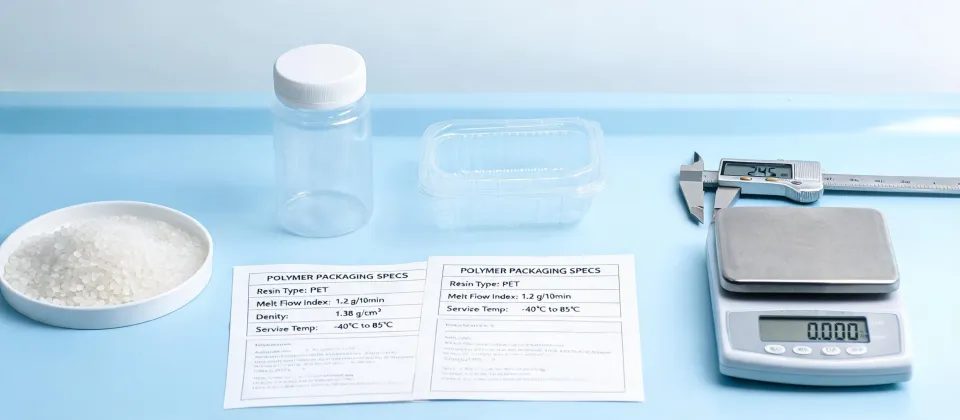
The first mistake I ever made in this role: I asked three suppliers for "polypropylene pellets" and compared their quotes like they were the same product. They weren't. PP comes in dozens of grades—some for injection molding, some for thermoforming, some for film. Grade designation, melt flow index, additive package, and certifications all shift the price and the part performance.
Before you pick up the phone, write down:
- Polymer family and full grade designation (e.g., PP homopolymer vs. copolymer)
- Melt flow rate target range for your process
- Physical property requirements (impact strength, tensile, flexural modulus)
- Required certifications (UL yellow card, FDA food contact, automotive specs)
That piece of paper is your anchor. It stops a supplier from steering you to a "similar" grade that's cheaper but doesn't actually meet the requirement.
Step 2: Compare Total Cost of Ownership, Not the Per-Pound Price
Resin is quoted per pound, so your instinct will be to compare that single number. Resist it. The lowest per-pound quote is frequently the most expensive order you'll place once you account for everything else.
My comparison spreadsheet tracks the per-pound price, packaging costs (gaylord vs. bags), freight and truckload minimums, per-order setup fees, MOQ premiums, payment terms (net 30 vs. prepay), and documentation fees. Plus, I keep a line item for supplier qualification status—a vendor that hasn't passed our trial process carries risk, and risk has a cost.
In 2023, I almost switched vendors because a new supplier quoted $1.42/lb against our incumbent's $1.55/lb. Sounds like a no-brainer, right? Except they charged a $350 setup fee per order, a $150 documentation fee, and their "good" price required a full truckload. We used about 12,000 pounds per quarter—not enough to justify that volume without paying for warehouse storage. The effective cost came out above $2.10/lb. We stayed with the incumbent.
Step 3: Validate Traceability and Paperwork Before the Order Ships
The documentation side is the most overlooked part of resin procurement. Nobody gets excited about certificates of analysis, but they matter.
Before your first order with a new supplier, ask for a sample COA from a recent lot. Check that it lists the lot number, manufacture date, and actual measured property values—not just a generic "meets spec" line. Then ask how they handle lot traceability. If material fails in production, you need to know exactly which lot was in the machine that day.
One of our worst supplier headaches wasn't off-spec material at all. The delivered pellets were actually fine, but the COA that came with them was for a different production lot. The vendor's "quality system" was basically a folder of PDFs, and lot numbers clearly weren't a priority. It took three weeks and a lot of quarantining to sort out (ugh). That kind of problem doesn't show up on the invoice, but it costs you anyway.
Step 4: Run a Trial Batch Before You Commit to Full Volume
This step feels like it adds time and cost to your schedule. In practice, it's the cheapest insurance in the process. A trial batch—a few hundred pounds, or whatever your molder needs for a real production run—costs a fraction of what a bad full-scale order costs.
In early 2024, we got a polycarbonate quote that was dramatically below market rate. "Great deal," I thought. It wasn't. The material ran fine in a quick lab test, but production parts came out with visible haze that our customer's QC immediately flagged. Because we'd run a trial, we lost only a small quantity and a few hours of setup time. If we'd bought the 10,000-pound order, that would have been a $12,000 mistake—before counting rework and missed deadlines.
When you do the trial, don't just glance at the parts. Run them through your normal QC inspection and any functional tests your parts require.
Step 5: Ask About Moisture Sensitivity and Shelf Life
It's easy to assume that resin pellets are inert and will sit in storage indefinitely. They're not. Many engineering polymers—TPU especially—are hygroscopic. They absorb moisture from the air. Pellets that look perfectly dry can produce splay marks, foaming, and brittle parts once processed.
Ask every supplier three questions:
- How long has this lot been stored, and under what conditions?
- What's the recommended residence time after opening?
- Does this grade require desiccant drying before molding?
Their honest answers might actually mean the "cheap" material you're eyeing requires extra drying time and energy—which changes your true cost per part. Better to know before you order a truckload. If they can't or won't answer these, that's a red flag.
Step 6: Verify the Supplier's Quality System, Not Their Sales Pitch
Every supplier says their quality is great. What you want is the structure that makes it true. Ask for a current ISO 9001 certificate, their incoming inspection procedure for raw resin, and their non-conformance/complaint handling process. A legitimate supplier can produce these without hesitation. A supplier that stalls or gives vague answers is telling you something.
I've been through enough customer audits over the years to know that documentation gaps on the supplier side become emergency work on mine. If they can't show me how they catch defects before resin ships, then my incoming inspection has to do that job for them. That's a real cost to my operation, even if it's not on their invoice.
Step 7: Qualify a Backup Supplier Before You Actually Need One
This is the step everyone skips when things are going well. I skipped it too, until a supplier hiked polymer prices 18% at our 2024 renewal because of an upstream supply disruption. We had no second quote, no tested alternative, no leverage. We paid the increase.
Qualifying a second source is the same process you just worked through with your primary vendor—spec sheet, TCO comparison, sample COA, trial batch—done once. Nobody says you need to split your volume. But having a qualified backup means you're never trapped by a single supplier's pricing power or production problems. At least, that's how it played out for us after we finally did it.
Step 8: Log Every Order So Patterns Become Visible
If you're not tracking your material orders in a spreadsheet or procurement system, you're flying blind. I keep a simple log of every resin order: vendor, grade, lot number, quantity, price per pound, delivery performance, and any quality issues. It took me a while to make the logging habit stick, but it's paid off more than once.
The log is how I caught one supplier's side fees that kept showing up on invoices but weren't in the original quote. It's how I noticed another vendor's actual lead times had crept from two weeks to two and a half, then three, while their quotes still promised two. You can't see those patterns without data. The spreadsheet is the most unglamorous tool in my procurement kit, and honestly, it might be the most valuable.
Common Mistakes to Avoid
Chasing the per-pound price. The unit price is the easiest number to compare, and the most misleading. It's one row in a much bigger table.
Trusting "it's basically the same thing." If a supplier says a cheaper grade is "equivalent" to what you spec'd, that means they haven't read your spec. Walk away.
Skipping verification because you're in a hurry. Or rather, skipping it because you trust the vendor to get it right. Five minutes of verification beats five days of correction—every time.
Bottom Line
Buying resin doesn't have to be a gamble. The eight steps above are cheap insurance: a few hours of upfront verification against the risk of off-spec parts, hidden fees, and production halts. If you're ordering through a supplier that makes the logistics easy—like the jsp store, where specs and pricing are visible up front, or the jsp app for tracking shipments and quick reorders—the mechanics get easier. The checklist still applies. The spec still needs to be right, the paperwork still needs to match, and the total cost still needs to be calculated. That's not paranoia. That's procurement.