A Practical Checklist for Ordering Plastic Replacement Parts: Avoiding the Mistakes I Made
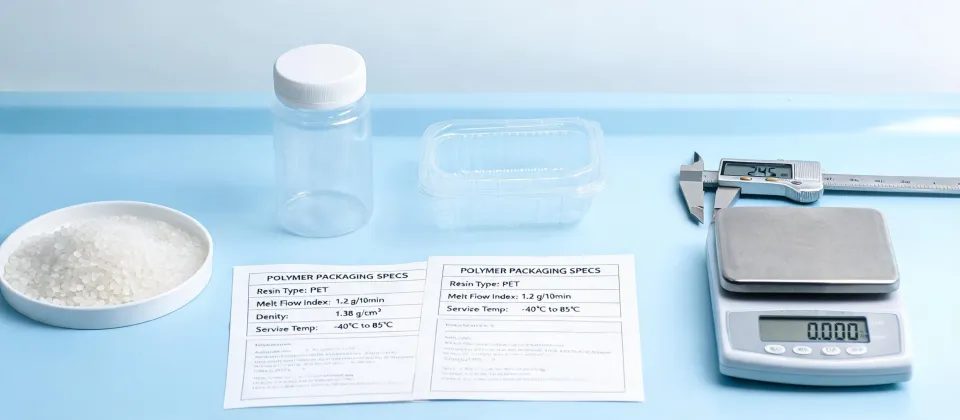
Who This Checklist Is For (And Why I Wrote It)
If you're an engineer, a small shop owner, or a procurement person who sometimes has to order plastic replacement parts or resin for a custom molding project, this is for you. Especially if you're dealing with quantities under 500 units and feel like suppliers don't take you seriously.
I've been handling injection molding and thermoforming orders for about 8 years now. In my first year (2017), I made the classic mistake of ordering the wrong plastic tote material—specified HDPE when the application needed PP. That error cost $890 in redo plus a 1-week delay. The client was not happy. Since then, I've documented 47 potential errors (actually, 46—I'm mixing up the count from another project). This checklist is what I now walk through before every order.
The 5-Step Ordering Checklist
Step 1: Identify the Exact Plastic Type (Don't Guess)
You'd think this is obvious, but I once approved a quote for 'polypropylene' without verifying the grade. Turns out the supplier used a general-purpose PP when I needed a UV-stabilized grade. What plastic is PP? It's polypropylene—a thermoplastic known for chemical resistance and fatigue life. But there are dozens of PP grades. Use the jsp portal to cross-reference material datasheets. You can filter by properties like tensile strength, flexural modulus, and heat deflection temperature.
Checklist item:
- Confirm the plastic family (PP, HDPE, ABS, PC, etc.)
- Identify the specific grade (e.g., PP homopolymer vs. copolymer)
- Verify with the molder's material database (jsp maintains a library of 200+ resins)
Step 2: Check the Physical Properties Against Your Environment
I learned this the hard way. In September 2022, I ordered resin enshrouded parts for an outdoor enclosure. The material was polycarbonate, which has great impact resistance but poor UV stability without additives. After three months in direct sun, the parts yellowed and cracked. We caught the issue on a $3,200 order—the whole batch had to be replaced.
Use the jsp portal to pull up property tables. Pay attention to:
- Temperature range (continuous use vs. intermittent)
- Chemical exposure (oils, solvents, cleaning agents)
- UV resistance and outdoor weathering
- Flame rating (UL 94 V-0, HB, etc.)
Step 3: Validate Dimensions and Tolerances (The 10-Minute Rule)
I've seen too many orders where the critical dimensions were 'assumed.' One time, I approved a print with a missing tolerance callout for a hole diameter. The parts came back with a 0.5mm variation—half the batch was unusable. We didn't have a formal dimension-check process then. Cost us $450 in wasted material plus embarrassment in front of the client.
Now I follow what I call the 10-minute rule: before submitting any order, spend 10 minutes comparing the drawing to the actual service conditions. Measure twice, order once.
Step 4: Address Minimum Order Quantities (MOQ) Honestly
Here's where small customer friendliness matters. I started my career in a tiny fab shop where our first order was $200 worth of nylon bushings. The vendor that treated us seriously back then? We still use them for $20,000 orders today. Small doesn't mean unimportant—it means potential.
When I'm sourcing replacement parts or custom molding for a low-volume run, I ask upfront:
- What is the real MOQ? (Some suppliers list 1000 but can do 200 with a slight premium)
- Is there a setup fee? (Often buried in the quote)
- Can I combine multiple parts to hit the MOQ?
The jsp portal actually lets you filter by MOQ range—I've found it handy when I'm trying to source plastic tote inserts in quantities of 50 instead of 500.
Step 5: Run the Final Pre-Order Check (My Errortaught Method)
After the third rejection in Q1 2024, I created a simple pre-check list. Run through these before hitting 'submit':
- Material confirmed with datasheet? (Not just 'PP'—grade and supplier)
- Dimensions match the original part? (Include a photo of the failing part)
- Lead time realistic? (Check jsp portal for current production calendar)
- Shipping method accounts for fragility? (I learned this the hard way—had a shipment of resin parts arrive cracked because I chose ground freight without padding)
- Payment terms set? (For new accounts, especially small orders, get this sorted early)
I once skipped step 1 because I 'knew' the material was PP. It was actually a PP+glass blend that the molder substituted without telling me. That was a $700 mistake—plus the rush order fee to replace it.
Common Mistakes to Avoid (From My Own Failures)
Mistake #1: Assuming all PP is the same. It isn't. PP homopolymer is more rigid; copolymer is tougher at low temps. If your part lives in a freezer, you want copolymer. If it's a structural bracket, homopolymer might be better.
Mistake #2: Forgetting about moisture absorption. Nylon and polycarbonate absorb moisture and need drying before molding. I had a batch of nylon bushings that warped because the resin sat out for a week. The molder didn't dry it—and I hadn't specified it in the order. Now I include 'pre-dry and moisture content test' in my specs.
Mistake #3: Ignoring the aftermarket reality. If you're ordering plastic replacement parts for older equipment, the original material might be obsolete or unavailable. Use the jsp portal's cross-reference tool to find an equivalent. Don't just pick the first 'similar' resin you find—I did that and ended up with parts that expanded differently under heat, causing bind.
Mistake #4: Thinking small orders mean low priority. Some suppliers treat you differently when you order 100 units vs 10,000. I've walked away from vendors who made me feel like a nuisance. The best vendors I work with now—including jsp—have a dedicated portal that handles small runs without attitude. If you're getting the silent treatment on a small test order, that's a red flag.
Final Note
I still kick myself for the $890 mistake in 2017. But I've saved easily ten times that amount by following this checklist. Print it out, stick it on your wall, or save it as a PDF in your jsp portal account. The goal isn't to be perfect—it's to catch the errors before they become expensive lessons.
If you're new to specifying plastics, start with the what plastic is PP question. Then move on to grades, additives, and processing methods. And don't let a minimum order quantity scare you—good suppliers will work with you, even on small runs.