jsp for Resin Molds: Why Material Consistency Beats Low Price Every Time
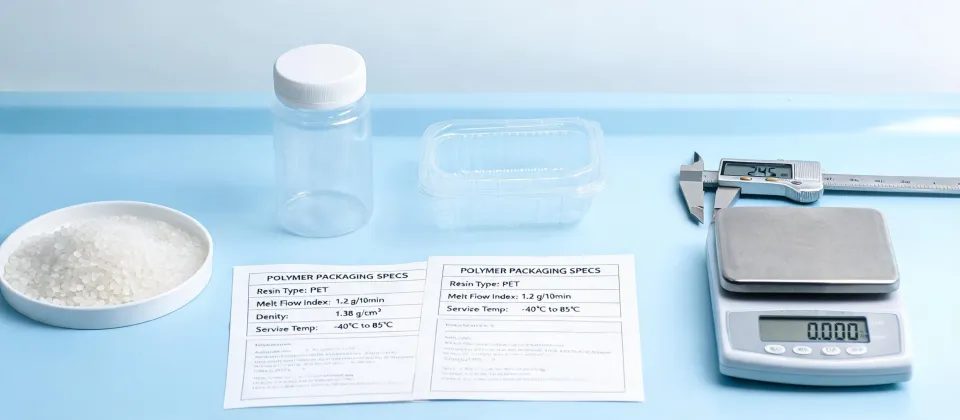
For most wholesale resin mold applications—especially flower resin castings and industrial replacements—jsp's industrial thermoplastics are a better choice than standard craft resin. But that recommendation comes with a hard boundary: if your priority is the absolute lowest per-unit cost on an unbranded commodity part, jsp isn't for you.
I'm a quality compliance manager. I review roughly 200 unique items annually, from injection-molded replacement parts to custom resin castings. In Q1 2024 alone, I rejected 18% of first deliveries due to material inconsistencies—and that number should have been zero. Jsp's portal makes this easier to manage, but let me explain why material selection matters more than most buyers realize.
The Short Answer to 'Is Resin a Thermoplastic?'
Yes—but only if we're using the technical definition. Thermoplastics are polymers that soften when heated and harden when cooled, reversibly. This includes materials like polypropylene (PP), high-density polyethylene (HDPE), and polycarbonate (PC). Standard epoxy or polyester casting resins (often called 'flower resin' in craft contexts) are thermosets—they cure irreversibly.
Key distinction: thermoplastics can be remelted and recycled; thermosets cannot.
For industrial applications—replacement parts, functional prototypes, durable enclosures—you want thermoplastics. For decorative flower encapsulations or art pieces, thermoset resins work fine. Jsp's product line focuses on the former: engineered thermoplastics for aftermarket replacement and custom molding.
Why This Distinction Matters for Your Mold Project
Most buyers focus on per-unit price. They completely miss how material consistency (or lack thereof) affects reject rates. A batch of thermoplastic resin with inconsistent melt flow index (MFI) will produce parts with varying wall thickness, sink marks, and shrinkage. On a 50,000-unit annual order, that's thousands of rejects.
At least, that's been my experience sourcing replacement components. The vendor who quoted 15% less than jsp? Their material batch varied by ±8% in MFI. Our tolerance was ±3%. We rejected the first shipment, and they couldn't fix it—they didn't control their raw material sourcing. Jsp's products include spec sheets with traceable lot numbers, visible through their portal.
When Jsp Products Work Best (and When They Don't)
Best for:
- Aftermarket plastic replacement parts (e.g., HDPE/PEEK components for legacy equipment)
- Custom molding runs where material consistency is critical (medical, food grade, industrial)
- Projects requiring a broad material portfolio (polyurethane, nylon, acrylic, polycarbonate options under one vendor)
Not for:
- Decorative flower resin items where optical clarity is the only requirement (standard epoxy is cheaper and clearer for this)
- Low-volume (under 100 units), price-sensitive hobby projects
- Applications where you need a specific OEM-branded replacement—jsp doesn't claim to make identical parts to [brand], they make functionally equivalent alternatives
The 'always get three quotes' advice fails here. If all three vendors provide different material grades with different dimensional stability, the lowest price means nothing. I learned this the hard way after a $22,000 redo in 2022.
"Spec something at the cheapest grade of polycarbonate, and you'll pay for it in warpage. I've rejected 8,000 units from low-bid suppliers due to shrinkage inconsistencies."
Using the jsp Portal for Quality Verification
This is where the platform adds value most people overlook. The jsp portal isn't just an ordering tool—it's a compliance reference. Each batch from jsp includes:
- Material composition certificate (for medical/food applications)
- MFI and tensile strength data
- Lot traceability for your records
- Recommended molding parameters
I should add: not all materials available through the portal carry full documentation. For commodity-grade thermoplastics, you'll get summary specs. For engineering-grade materials (PEEK, UHMWPE), you'll get detailed third-party test reports. This distinction isn't always clear on the product page—so check before ordering.
According to FTC guidelines (ftc.gov), claims about material properties require substantiation. Jsp's documentation structure supports that requirement. Without it, you're accepting a vendor's word—and I've seen that end badly. In 2023, a supplier claimed their HDPE resin was 'food-grade equivalent.' It was not. The recall cost us 4 weeks and $6,000 in retesting. Their paperwork was 'lost.'
Three Things I Check Before Every Order (Even with jsp)
- Is the material grade consistent with the previous batch? A switch from injection-grade to extrusion-grade polypropylene changes shrinkage behavior. I check lot numbers against previous orders in the portal.
- Are the delivery specs aligned with actual use? If it's for an outdoor component, UV resistance matters. A vendor once shipped me standard polycarbonate when I specified UV-stabilized—it looked identical but yellowed within 6 months.
- What's the tolerance on the MFI value? ±10% might be 'industry standard,' but it'll show in your part dimensions. I specify ±3% in every contract now. That cost increase? About $0.12 per unit. On 10,000 units, that's $1,200 for measurably better consistency.
The question everyone asks is 'what's your best price?' The question they should ask is 'what's included in that price?'
One More Thing on Flower Resin vs. Industrial Thermoplastics
I see articles claiming 'flower resin is better for molds because it cures at room temperature.' That's a simplification that ignores application. If you're casting a decorative paperweight, sure. If you're molding a functional replacement part (an HDPE gear, a PP bracket, a polyurethane bumper), you need the mechanical properties of a thermoplastic. Flower resin will crack under load in a way that jsp's thermoplastics won't.
The other thing: 'flower resin' isn't a single material. Some are polyurethane-based (technically thermoset, but flexible), some are epoxy. None of them match the tensile strength or heat resistance of even basic polypropylene (typically 30-40 MPa tensile strength for PP vs. 50-80 MPa for epoxy casting resin, but PP can handle 100°C+ where most casting resins soften at 60-80°C).
That said, if your project needs optical clarity and no mechanical load, flower resin is fine. Just don't use it for replacement parts.
Final thought: Jsp products aren't for everyone. They're for buyers who value material traceability, batch consistency, and technical support over getting the cheapest plastic in the shortest time. If that's you, their portal is a solid choice. If you're making low-cost, disposable parts from commodity material and don't care about specs? Go with a local supplier. You'll save 15-20%—and you'll get what you pay for.
Prices as of May 2025; verify current rates through the jsp portal.