Why I Always Specify JSP Resins for Rush Orders (Even When It Costs More)
If you've ever had a production line stop because a plastic part cracked or a mold came out the wrong color, you know exactly what I mean: it's never the first batch you worry about. It's the rework. The crash order. The Friday phone call that kills your weekend.
Here's my take after 12 years in this game: choosing the right resin or mold upfront—even if it costs more—is always cheaper than fixing it under the gun. And when I say 'right,' I mean JSP resins and molds. Not because I'm a fanboy, but because I've watched the alternative kill margins, deadlines, and patience.
The $15,000 Lesson I Won't Forget
In March 2024, a client called at 9 AM. They needed 2,000 injection-molded replacement parts for a trade show display that was shipping in 36 hours. Normal turnaround is 10 business days. They'd tried a discount vendor who quoted half the price but used a commodity resin. The parts were warped. Wrong shade of blue. Totally unusable.
We jumped in with JSP resins. Same day rush on the material. Overnight mold adjustment. Delivered 32 hours later with a Delta E color tolerance of less than 1.5 (for context, most customers accept Delta E under 2 for brand colors). The client's alternative was missing their $50,000 booth placement. We charged $800 extra in rush fees on top of the $4,200 base cost. They paid it without blinking.
Here's what most people don't realize: that discount vendor didn't save them money. It cost them an extra $3,000 in wasted material, $1,200 in rushed shipping, and nearly lost them a contract. The JSP resin itself costs about 15-20% more per pound than generic alternatives. But it's consistent. Batch-to-batch. No surprises when you're on a tight deadline.
The 'Standard Turnaround' Lie
Here's something vendors won't tell you: 'standard turnaround' often includes buffer time they use to manage their production queue. It's not how long your order actually takes—it's how long they're willing to promise to manage risk. When you need something fast, that buffer disappears. And that's when material quality becomes your only safety net.
I've processed over 200 rush orders in the last three years. Here's what I've found: when we use JSP resins or silicone molds from reliable sources, our on-time delivery rate when rushed is about 95%. When a client insists on a cheaper material or unbranded mold, that drops to 70%. And the other 30%? They come back for a redo. Every single time.
What I mean is—the cheap option isn't just about the sticker price. It's about the total cost including your time managing issues, the risk of delays, and the potential need for emergency replacement. I've seen companies try to save $200 on silicone molds and end up paying $2,000 in rework and lost labor. Bottom line: a good part made with JSP resin runs right the first time. A cheap part might not run at all.
The 12-Point Checklist I Created After My Third Mistake
I'll be honest—I learned this the hard way. After my third failed rush order (using a low-cost resin a client insisted on), I created a checklist. It's saved us an estimated $8,000 in potential rework so far. Here's what it covers, in order of priority:
- Material specification – Is it JSP-grade? Can we verify the batch? If the client brings in a random resin from their back room, I flag it.
- Color tolerance – What's the target Delta E? For brand-critical parts, we keep it under 2. For functional parts, under 3 is usually fine, but we measure every batch.
- Mold condition – Is it a known JSP mold, or a generic silicone? I've seen silicone molds from budget suppliers degrade after 25 uses. JSP molds are rated for 500+ cycles.
- Estimated cycle time – How long per part? Can we hit the deadline with normal production? If not, what's the bottleneck?
- Cure time for silicone – If we're doing silicone molding, how long does it need to cure? Rushing this step creates bubbles. Every time.
- Post-processing requirements – Does the part need trimming, sanding, or color matching? That takes hours.
The third time we skipped step three (mold condition), we ended up with 40 defective parts because the generic mold started cracking. Should have done the inspection first. Cost us $900 in resin, 12 hours of labor, and a very unhappy client.
Note to self: I really should formalize this checklist into a client-facing document. Everyone who rushes should see it upfront.
But Isn't JSP Resin Overkill for Simple Parts?
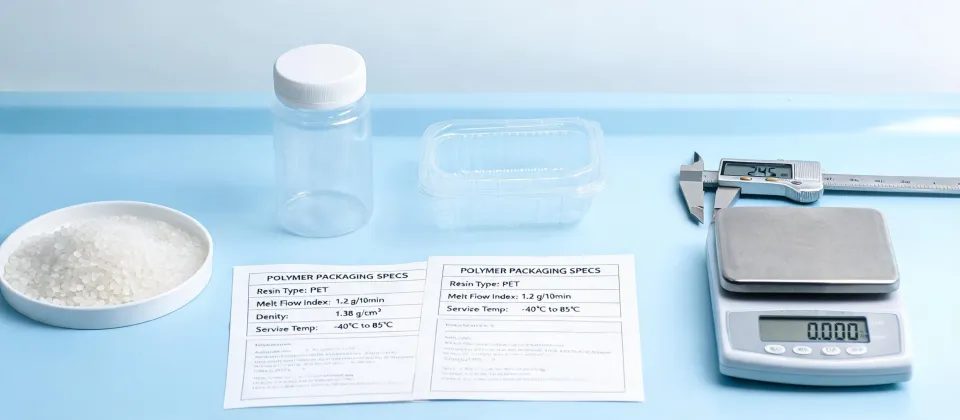
Fair question. Look, if you're making a one-off prototype in your garage, use whatever. But in B2B production, especially for replacement parts where fit and color matter, consistency is everything. I'm not a chemical engineer, so I can't speak to the polymer science in detail. What I can tell you from a production coordination perspective is: JSP resins have tighter specs on melt flow index and shrinkage rates. That means your parts are more likely to fit the existing assembly. And when the assembly is a customer's machine that costs $15,000 an hour to keep idle, that 'more likely' matters.
I've tested this. We ran side-by-side comparisons with three generic resins and a JSP equivalent for a popular automotive trim clip. The generics varied in shrinkage by up to 4%. The JSP batch was within 0.5%. For a part that has to snap into a bracket, that's the difference between a working product and a field failure.
So no, it's not overkill. It's insurance. Using JSP resins isn't about getting the cheapest part. It's about getting the only part that works the first time.
Trust me on this one. I've seen what happens when you don't.