jsp Resins & Molding: 7 Key Questions About Plastic Injection Molding, HDPE & BPA Safety
-
jsp Resins & Molding: 7 Real Questions About Injection Molding, HDPE & BPA Safety
-
1. Where does injection molding plastic come from when you order from a service like jsp?
-
2. What are jsp resins actually known for?
-
3. What's the jsp store like for ordering parts?
-
4. Wait, is jsp related to plastic surgeons?
-
5. Is HDPE plastic BPA free? Let's clear this up.
-
6. What's the biggest hidden cost in custom injection molding?
-
7. How do you compare materials like polycarbonate vs. acrylic vs. HDPE for a replacement part?
-
1. Where does injection molding plastic come from when you order from a service like jsp?
jsp Resins & Molding: 7 Real Questions About Injection Molding, HDPE & BPA Safety
If you're sourcing custom plastic parts or replacement components, you've probably run into a few rabbit holes. HDPE vs. PP. Is BPA actually in that bottle? And what the heck makes a molding quote go from reasonable to "wait, that's per unit?"
I'm a quality compliance manager in the plastics industry. I review specs and physical parts before they go to customers—roughly 250 unique items a year. I've rejected about 12% of first deliveries in 2024 alone due to dimensional drift or material cert issues. This FAQ answers the questions I keep getting from buyers and engineers.
1. Where does injection molding plastic come from when you order from a service like jsp?
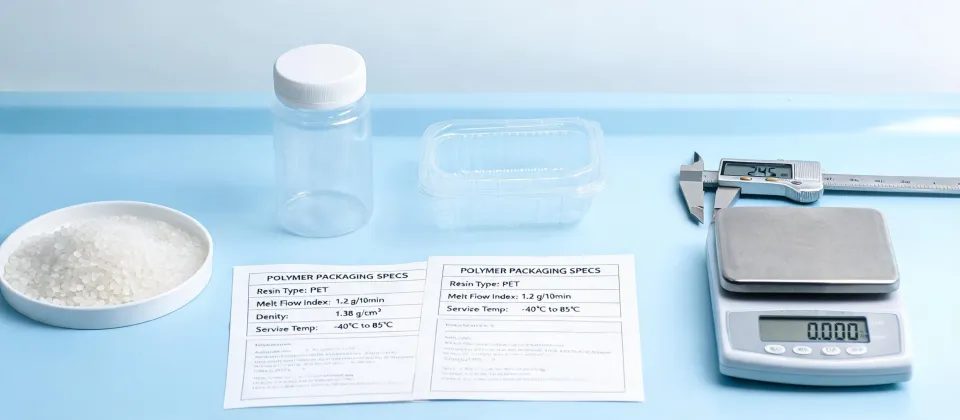
Most custom molding services—including those that source through jsp resins—buy raw material in pellet form. You're looking at polypropylene, HDPE, polycarbonate, or ABS pellets from major resin producers. The molder checks the material data sheet (MDS) to confirm melt flow index and impact resistance against the spec.
My experience is based on about 300 orders across mid-range and precision runs. If you're working with a service that doesn't share the MDS before cutting a tool, that's a red flag. I've seen a batch of polypropylene that looked right but was 15% below spec on impact strength—the molder had swapped material to save $0.12 per pound. That's how you get parts that crack in the field.
Take it from someone who's rejected those parts: always ask for the original resin supplier and grade. A simple "What resin are you using and who made it?" can save you a recall.
2. What are jsp resins actually known for?
jsp resins is primarily known as a distributor and custom molder focusing on aftermarket replacement parts. They stock a broad portfolio: polypropylene, polycarbonate, HDPE, polyurethane, and various engineering thermoplastics. Their differentiation is that they can reverse-engineer or match materials for older or obsolete components.
One engineer I worked with needed a replacement part for a conveyor system that hadn't been made since 2008. Original resin unknown. jsp matched it using a durometer test and a heat deflection check—then compression molded a run of 600 units. It worked. The alternative was a full redesign at $18,000. Was it perfect? No, the color was slightly off. But from my quality perspective, the functional spec was met. And in the aftermarket world, that's the game.
3. What's the jsp store like for ordering parts?
The jsp store is pretty standard for a B2B industrial parts supplier. You'll find a searchable catalog, filterable by material type (polypropylene, polycarbonate, HDPE), and you can request quotes for custom orders. For off-the-shelf replacement items, it's straightforward. For custom molding, you'll upload a CAD file or spec sheet and get a quote.
I've ordered prototypes through the store for testing—hundreds of SKUs—well, several hundred, mostly for checking dimensional tolerance. The interface gets clunky when you're ordering mixed materials (like 10 HDPE and 8 polyurethane in one order) because the pricing structure changes per resin type. That's not unique to jsp, though. Most B2B stores have that issue.
A practical tip: request a consolidated quote for mixed-material orders. The system might not auto-combine shipping, but a human can.
4. Wait, is jsp related to plastic surgeons?
No. That's a separate and unrelated field. If you're searching for plastic surgeons, jsp is not your answer. I mention this here because I've seen the search cross over. The term "plastic" in "plastic surgeons" refers to surgical reconstruction or cosmetic procedures—not materials. In our industry, "plastics" means polymers, resins, and molded parts. They share a root word and nothing else.
If you reached this article looking for medical information, I apologize for the misdirection. For everyone else buying HDPE sheets or injection molded components, this is the right place.
5. Is HDPE plastic BPA free? Let's clear this up.
Yes. HDPE plastic (High-Density Polyethylene) is naturally BPA-free. BPA (Bisphenol A) is a chemical compound used primarily in the production of polycarbonate plastics and epoxy resins—not in HDPE. Pure HDPE contains no BPA in its polymer chain, and no BPA is added during the normal manufacturing process.
Per the FDA's regulations on food-contact substances (21 CFR 177.1520), HDPE is approved for food contact with no BPA restriction because BPA isn't present. That's why you see HDPE in milk jugs, cutting boards, and water bottles labeled "BPA-free."
But here's the nuance: "BPA-free" on an HDPE product can be misleading. It's BPA-free by definition. Some manufacturers add the label for marketing, while others might use recycled HDPE that could theoretically carry trace contaminants. For critical applications—like medical or food storage—I recommend requesting a Certificate of Analysis for BPA and other chemicals.
Per FDA 21 CFR 177.1520, HDPE is suitable for food contact and does not require BPA testing under normal use. However, recycled or mixed-source HDPE should be tested for contaminants. Source: FDA Regulations on Olefin Polymers.
I went back and forth on whether to even raise this. On paper, HDPE is BPA-free. Simple. But then I heard from a buyer who had a supplier claim "BPA-free HDPE" and charge a premium. The material was standard HDPE. The premium was unnecessary. So: HDPE is inherently BPA-free. If someone charges extra for that label, ask why.
6. What's the biggest hidden cost in custom injection molding?
After reviewing hundreds of molding quotes, the most common hidden cost is tooling modifications. You get a quote for the part and the mold. Then you need a minor undercut change for assembly clearance. That's a $2,000–$5,000 adjustment. Steel is expensive, and mold revisions don't follow economies of scale.
The vendor who lists all fees upfront—even if their base price looks higher—usually costs less in the end. I've learned to ask "What's NOT included" before "What's the price." Mold testing fees, material sampling, and dimensional certification reports are common add-ons that eat budgets.
One project I managed: quoted $12,000 for a proto mold and 500 parts. But the final invoice was $18,200 because "two mold iterations" were not in the original scope. That's a 51% increase. The shop claimed it was standard. It wasn't—they knew we needed iterative testing and didn't specify it. Transparency isn't just ethical; it's cheaper. Now every contract I review includes a line for acceptable mold revisions and tolerances.
7. How do you compare materials like polycarbonate vs. acrylic vs. HDPE for a replacement part?
This is the biggest question I see from new buyers. And I can't give you a single answer because it depends on the application. But here's a framework:
- Polycarbonate: High impact strength, UV resistant, good clarity—but susceptible to chemical stress cracking (especially with ammonia-based cleaners). Good for safety shields and structural parts.
- Acrylic: Better optical clarity than PC, harder surface, but less impact resistant. Good for display windows that won't take hits.
- HDPE: Low cost, chemical resistant, flexible—but lower stiffness and cannot be bonded easily with adhesives (needs welding). Good for tanks, cutting boards, industrial containers.
- Nylon (PA6 or PA66): High strength, wear resistant, self-lubricating—but absorbs moisture which swells the dimensions. Good for gears and bushings.
I often say to buyers: start with the environment. What chemicals will it contact? Temperature range? Expected load? Then eliminate materials that are incompatible. For example, don't use polycarbonate near alcohol or ammonia. Don't use HDPE if you need clear parts. Don't use nylon for water-exposed parts without accounting for hygroscopic swelling.
If you're working with jsp or similar services, ask if they offer material comparison data sheets. Most will show you thermal deflection, tensile strength, and chemical resistance side-by-side.
Material property comparisons should reference published test data (ASTM D638 for tensile, ASTM D790 for flexural modulus, ASTM D792 for density). These are repeatable, objective measures. Don't rely on supplier claims alone—ask to see the test report on the specific batch.
So there you go. Seven questions, seven answers. No filler. If you've got a specific application you're struggling with, start with the resin specs and ask the supplier to certify the material. That's where good quality control begins.