JSP Ordering: 3 Scenarios Where You Choose Wrong (and How to Fix It)
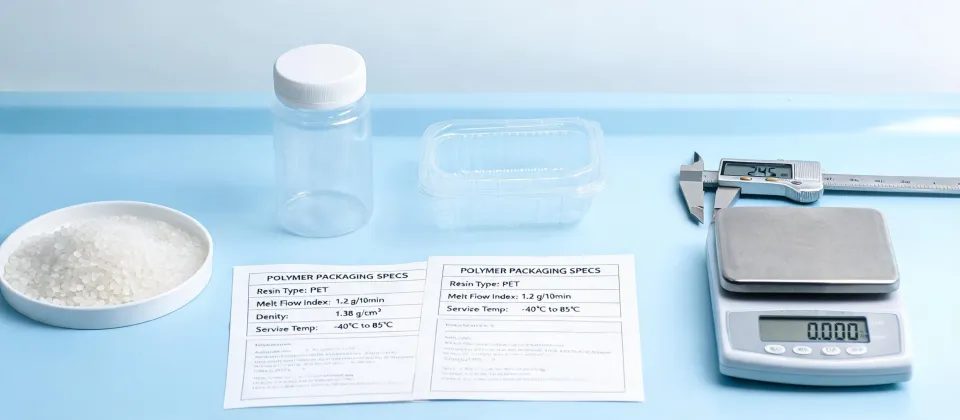
I've been handling custom plastic part orders for about 5 years now. Full disclosure: I've personally made and documented 11 significant mistakes, totaling roughly $4,800 in wasted budget. One of those was a $3,200 order of PVC sheets that came out looking like a wavy mess because I didn't match the grade to the application.
So when someone asks me, 'What's the best JSP product to buy?' my honest answer is: it depends entirely on your specific project. There isn't one magic resin or one perfect sheet. The trick is figuring out which scenario you're in.
Here are the three most common scenarios where I see buyers—and yes, I've been there myself—pick the wrong solution.
Scenario A: The "I Just Need Plastic" Buyer
This is the most common trap. You need a sheet, a mold, or a replacement part. You know the general shape. You don't think the material matters that much.
Typical mistake: Grabbing a standard PVC sheet or a general-purpose resin from the JSP store thinking it'll work fine.
What usually happens: The part cracks under stress. The sheet warps when exposed to heat. The mold doesn't release cleanly. You've now wasted the $50 in material plus the 3 hours of labor to fabricate it. I've seen this happen on a 47-piece order where every single item had the issue. That particular debacle cost us $890 in redo plus a 1-week delay.
What to do instead: Before you even open the JSP catalog, answer this: What is the absolute worst thing that could happen to this part?
- Will it sit in direct sunlight? (UV resistance matters)
- Will it carry weight? (Mechanical strength matters)
- Will it be near a heat source? (Thermal tolerance matters)
- Does it need to be food-safe or chemical-resistant?
Once you know the 'worst case,' you can narrow down the material. For example, if you're building a resin walkway that's outdoors, a standard indoor PVC sheet is gonna fail. You need an exterior-grade or UV-stabilized alternative. Or, for a lightweight replacement part that sees no load, a basic polypropylene sheet might be perfectly fine and way cheaper than a specialty resin.
Scenario B: The "I Need It Yesterday" Rush
We've all been there. The deadline is tight. You don't have time to research. You pick the fastest option from the JSP store.
Typical mistake: Selecting a material based purely on stock availability and delivery speed, ignoring the processing requirements.
What usually happens: The material requires a different curing time, a specific mold temperature, or a post-processing step you didn't plan for. I once ordered 12 silicone molds with a 'standard' cure time, thinking we could pop them open in 4 hours. Nope. The supplier's data sheet clearly said 8 hours minimum. We rushed it. The molds were sticky and deformed. On a $1,200 order, we had to scrap 8 of them. The lesson: speed of delivery doesn't equal speed of production.
What to do instead: Create a small pre-check list. Before you click 'order,' confirm these three things:
- Lead time: How fast can it ship?
- Processing time: How long does the material take to set, cure, or finish?
- Special requirements: Does it need a specific machine, temperature, or skill set?
To be fair, sometimes the rush is legitimate. If your customer is flexible, a standard polypropylene sheet might work. But if they aren't, you're better off paying for a faster shipping option on the correct material than rushing the wrong one and having to redo it. I get why people go for the fastest stock item—deadlines are real. But the hidden cost of a rushed mistake is almost always higher than waiting an extra day for the right thing.
Scenario C: The "Sustainable at All Costs" Buyer
This is the newest scenario, and it's tricky. You want to claim sustainability. You want a material that's 'green.' You ask, 'is polypropylene plastic sustainable?'
Typical mistake: Assuming any 'recyclable' or 'biodegradable' label is the best choice for every application.
What usually happens: You pick a bio-plastic that degrades too quickly for your intended use. Or you choose a recycled material that has inconsistent quality. Or you pay a 40% premium for a 'sustainable' resin that actually performs worse than a standard, durable, long-life plastic.
What to do instead: Sustainability in plastics isn't just about the material itself—it's about the product's lifespan. A part that lasts 10 years is often more sustainable than a 'compostable' part that lasts 6 months and then needs replacing.
Here's the framework I use now:
- For short-term, single-use items? Look into recycled PP or PET. It's a legit choice, and many options are available in the JSP store. Just verify the processing specs, because recycled materials can be less consistent.
- For durable, long-term parts (like a resin walkway or a structural replacement part)? A virgin, long-lasting plastic is often the more sustainable choice. It lasts longer, doesn't need replacement, and can be recycled at the end of its long life.
- The surprise for me wasn't the price difference between 'green' and 'standard' plastics. It was that the 'expensive' standard option—because it was more durable—actually had a lower total cost of ownership over 5 years.
The vendor who lists all fees upfront—even if the total looks higher—usually costs less in the end.
How to Know Which Scenario You're In
This is the most important part. Don't guess. Use this quick checklist:
- Are you under a severe time crunch? → You're in Scenario B. Use the pre-check list. Do NOT skip the material-matching step just because of speed.
- Is a sustainability claim a non-negotiable part of the project? → You're in Scenario C. Focus on lifespan, not just the label.
- Are you just replacing a broken part with something 'similar'? → You're likely in Scenario A. Ask the 'worst case' question. It's the cheapest insurance you can buy.
- Are you confused? → Talk to someone. The JSP store has technical data sheets. Use them. I've learned to ask 'what's NOT included' before 'what's the price.' It's saved me a ton of grief.
I know this isn't a magic, one-answer solution. Honestly, there isn't one. But picking the right scenario is the first step to not ending up with a $3,200 mistake.
Prices as of January 2025; always verify current JSP product specifications and availability.