How We Chose the Right Plastic for a Replacement Part: A 5-Step Material Selection Checklist
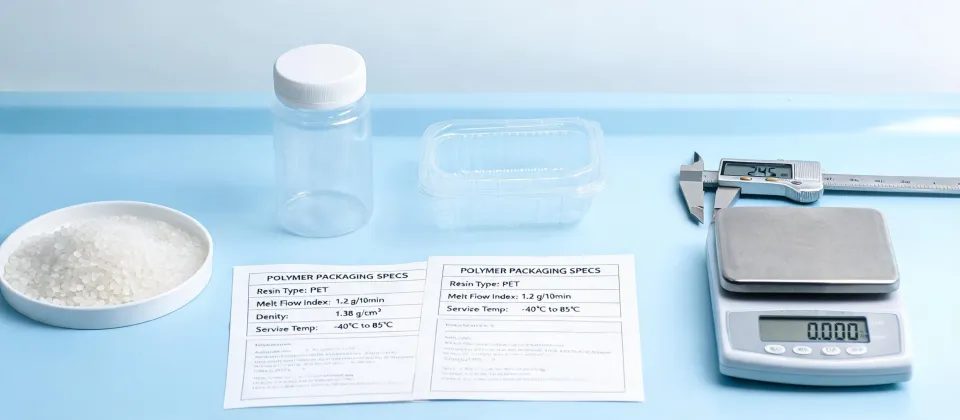
Here's the thing about sourcing plastic replacement parts: it's rarely about finding someone who can mold the part. It's about making sure the material you choose won't crack, warp, or fail under actual use. I've been handling orders for jsp resins for about 6 years now, and in that time, I've personally made—and documented—enough mistakes to fill a pretty embarrassing notebook.
This checklist is born from those mistakes. If you're a maintenance manager, a small manufacturer, or just someone trying to get a prototype right without blowing your budget, this is for you.
When to Use This Checklist
You're not trying to invent a new plastic. You're selecting from existing materials (like polypropylene, polycarbonate, HDPE) for a specific application. This is for the step before you talk to a molder or hit 'submit' on a quote request.
It took me 2 years and roughly $4,500 in wasted material to build this list. I hope it saves you the headache.
-
Step 1: Define the Failure Conditions
Before you even look at a material data sheet, answer this: What made the original part fail?
People think cheaper materials cause failures. Actually, wrong materials cause failures. I had a client insist on polycarbonate for a part that would be in constant contact with isopropyl alcohol. The part started crazing (tiny cracks) within 3 weeks. Polycarbonate is tough, but it hates alcohol. HDPE would've been a better choice.
Your checklist for this step:
- Was the original part cracked, warped, or worn?
- What temperature range will it see? (Room temp is not 'no temp.')
- Will it touch chemicals, oils, or solvents?
- Will it be outdoors? (UV degradation is real.)
"What most people don't realize is that 'tough' and 'chemical resistant' are often opposites. Polycarbonate is tough. HDPE is chemical resistant. They're not the same thing."
-
Step 2: Don't Ask for a Material — Ask for a Grade
Here's something vendors won't tell you: "polypropylene" isn't one thing. There are dozens of grades. A general-purpose PP might have a tensile strength of 4,000 psi, while a 40% glass-filled PP can hit 10,000 psi. If you just ask for "polypropylene," you're asking for trouble.
In 2022, I approved a quote for "polypropylene" bowls. The vendor shipped a commodity grade that couldn't handle hot water. The customer's application? Hot liquid filling. $1,200 worth of plastic bowls—straight to the trash.
What to do instead: Ask your supplier for the full material name and any fillers or reinforcements. Jsp's portal (login jsp required for detailed specs) lists the exact resin designation for every product we've manufactured. Use that.
-
Step 3: Verify Your Real Temperature Requirement
This is the one that gets almost everyone. Spec sheets usually list two numbers: Continuous Service Temperature (CST) and Heat Deflection Temperature (HDT). They are not the same.
Continuous Service Temperature (CST): The temp the material can handle indefinitely without losing key properties.
Heat Deflection Temperature (HDT): The temp at which the plastic deforms under a specific load. It's a short-term test.
Saving $80 by choosing a cheaper plastic that meets HDT but fails CST? Ended up spending $400 on a rush reorder. The design engineer saw the HDT number, assumed it was fine, and didn't read the fine print. The part lasted 3 months before it sagged.
For any part that sees continuous heat (like near a motor or in a sunny enclosure), use the CST spec.
-
Step 4: Match the Material to the Molding Process
Not all plastics are easy to mold into all shapes. I learned this when a design specified a hard-to-fill grade of nylon for a part with extremely thin walls. The molder couldn't get a consistent fill. The result: waste.
Three things to check:
- Melt Flow Index (MFI): A high MFI means the material flows easily, good for thin walls. A low MFI is better for thick, strong parts.
- Shrinkage rate: Different materials shrink at different rates. Polypropylene shrinks more than ABS. Your mold needs to account for this.
- Processing temperature: Does the molder's equipment handle this material? Teflon (PTFE) requires very high processing temps not all shops can do.
-
Step 5: Get a Sample (Or a Test Mold)
Paper specs are great. But nothing beats a real test. I've seen material data sheets that looked perfect on paper, but the actual part had a weird surface finish or warped as it cooled. The cause? The filler content wasn't distributed evenly in the base resin.
Per jsp's internal guidelines, if you're ordering more than 500 units, it's worth requesting a sample or paying for a simple test mold. It saved a client $3,000 once on a 2,000-piece order for plastic replacement parts. The test revealed that the specified material had a 12-week lead time; they switched to an equivalent with a 2-week lead.
Things to Watch Out For (From Experience)
Here are a few "savings" that ended up costing me more:
- Saved $80 by skipping a sample. Ended up spending $400 on re-runs when the material reacted badly to the mold release agent.
- Chose a 'budget' vendor for plastic balloons (a unique high-stretch grade). They sent a higher-durometer material that pinhole leaked. The cost to re-fabricate the entire batch? $1,700.
- Assumed 'what type of plastic is polypropylene' was a simple question. It is. But asking 'what type of polypropylene is best for automotive under-hood clips' is the real question. The internet can tell you PP is a semi-crystalline thermoplastic. It can't tell you which grade is right for your application. That requires experience.
One last thought: The vendor who said 'this isn't our strength—here's who does it better' earned my trust for everything else. Don't be afraid to ask. Knowing your limits isn't a weakness.