After 6 Years of Buying JSP Resins: Here’s What Actually Matters for Your Bottom Line
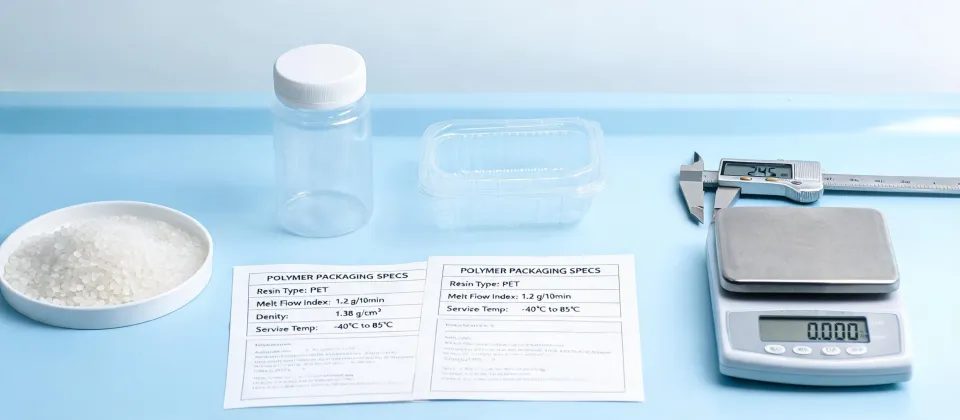
JSP Resins Save You Money — But Not the Way You Think
If you're sourcing JSP resins or plastic materials for your manufacturing line, the smartest move isn't hunting for the lowest per-pound price. It's understanding your total cost of ownership (TCO). I learned this the hard way over six years of tracking every invoice, every rejected batch, and every last-minute expedite fee.
I'm a procurement manager at a mid-sized manufacturing company. We spend roughly $120,000 annually on resins, plastic pellets, and molded components. I've negotiated with over a dozen suppliers, documented every order in our internal system, and built a cost calculator after getting burned on hidden fees — twice.
Alright, let me explain what that actually means for someone buying JSP products, TPU, or trying to figure out if polypropylene is the right material for their next run.
What 'Buying JSP' Actually Means for a Manufacturer
First, let's clear up a common confusion. When people search for "JSP" or "JSP app," they're often thinking of Java Server Pages (the web technology). But in the manufacturing world — the one I live in — JSP refers to a Japanese chemical and plastics manufacturer known for its expanded polypropylene (EPP) beads, ARPRO, and other specialty resins. Their resins are used in automotive components, packaging, consumer goods, and industrial parts.
If you're looking to buy resin from JSP, you're likely sourcing EPP beads, polypropylene compounds, or custom formulations. And the way you buy matters more than you'd think.
My Experience: The $4,200 'Cheap' Resin That Cost Us $6,800
In Q2 2024, we compared quotes across five vendors for a standard polypropylene grade. Vendor A quoted $2.15/lb. Vendor B quoted $1.78/lb. I almost went with B until I calculated the full cost. Vendor B charged a $350 setup fee per color change, $220 for palletizing, and $185 for documentation — per order. Add it up, and that cheaper resin actually cost us 23% more over a six-month contract.
That's the kind of hidden cost that doesn't show up on a quote. I'm not a logistics expert, so I can't speak to carrier optimization. What I can tell you from a procurement perspective is: always ask for a full TCO breakdown before signing.
TPU Products: Where Quality Beats Price Every Time
Another area where I see manufacturers overspend is on TPU products (thermoplastic polyurethane). TPU is used for tubing, films, seals, and protective parts. It's a fantastic material — flexible, durable, resistant to abrasion. But it's also one of those materials where the cheapest option can cost you a lot more later.
Here's a real example from our shop floor. We sourced TPU pellets from a low-cost supplier for a batch of protective gaskets. The price was 18% below our usual vendor. But the melt flow index was inconsistent. About 12% of the gaskets failed during quality testing. We had to re-run the order, paying for both materials and overtime. Total loss: about $1,400 on a $4,000 order.
Lesson: For critical TPU applications, buy from established suppliers like JSP who provide consistent material specifications. I'll happily pay a 10-15% premium for material that runs predictably.
Is Polypropylene a Type of Plastic? (And Why It Matters)
A surprising number of buyers ask: "Is polypropylene a type of plastic?" Yes, it is. Polypropylene (PP) is a thermoplastic polymer used in everything from automotive parts to food containers. It's lightweight, resistant to chemicals, and recyclable in many industrial streams.
But — and this is a big but — not all polypropylene is the same. JSP produces specialized polypropylene resins with specific properties: high impact resistance, UV stability, or flame retardance. If you order a generic PP grade thinking "it's all the same," you might end up with material that fails under your specific conditions.
I've made that assumption before. I assumed "same specifications" meant identical performance across brands. Didn't verify. Turned out the generic PP had a lower melt flow rate, which caused warping in our injection molds. Another costly lesson.
The 'JSP App' Myth and Other Digital Tools
One more thing: people searching for a "JSP app" might be looking for a digital tool to manage resin orders or track shipments. JSP doesn't have a consumer-facing app for procurement — at least not as of early 2025. But they do offer technical datasheets, material selection guides, and supplier portals through their business division.
In my experience, the most efficient way to manage orders is still a well-organized spreadsheet or a basic procurement system. I track every metric: unit price, lead time, reject rate, and non-conformance cost. That data helps me negotiate better terms and avoid repeat mistakes.
Bottom Line: Buy Smarter, Not Cheaper
After tracking over 200 orders in our procurement system, I found that roughly 30% of our budget overruns came from hidden costs — not from the material price itself. We implemented a policy requiring three vendor quotes with full TCO breakdowns for any order above $2,000. That one change cut our overruns by about 40% in the first year.
My experience is based on mid-range orders — nothing ultra-premium or ultra-budget. If you're sourcing specialized medical-grade resins or extremely high-volume commodity plastics, your mileage will vary. But the principle holds: dig into the details before you commit.
According to FTC guidelines (ftc.gov), advertising claims about material performance must be substantiated. So when a supplier says their resin is "more durable" or "100% recyclable," ask for the data. A good supplier like JSP will provide test results and certifications.
In the end, the goal isn't to buy the cheapest resin. It's to buy the resin that gives you the lowest total cost over the full lifecycle of your product. Start with TCO. Verify your assumptions. And don't skip the fine print (unfortunately, I've done that twice — won't happen again).