Polyurethane Plastics vs. Polyethylene vs. ABS: A Quality Inspector's Guide to Choosing the Right Resin
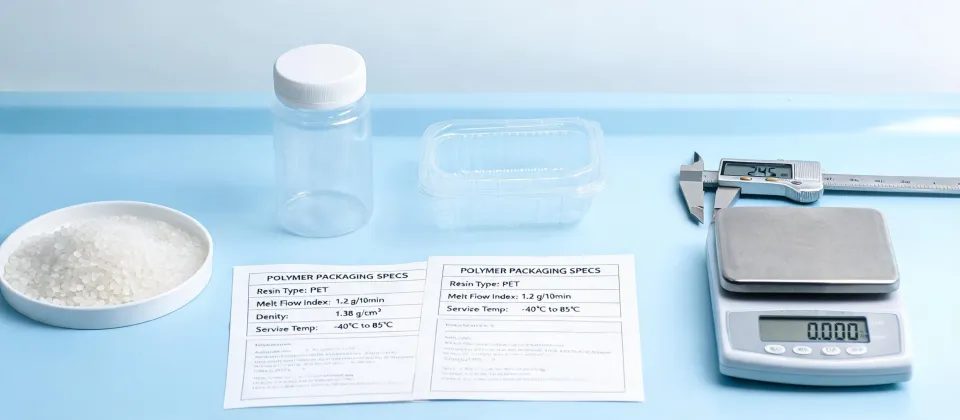
There's no single 'best' plastic. Anyone who tells you polyurethane is always the answer, or that ABS is obsolete, hasn't been on the production floor long enough. I've reviewed specs for over 200 unique resin-based items annually for the last 4 years, and the right choice depends entirely on what you're building, the environment it will face, and—this is the part I see people get wrong most often—your tolerance for manufacturing variability.
Let's break this down by scenario. You can roughly split most industrial and commercial applications into three buckets where one material type clearly outperforms the others.
Scenario A: You Need Something Flexible, Durable, and Resistant to Wear—Think Seals, Gaskets, or Protective Coatings
If your part needs to absorb impact, resist abrasion, or flex repeatedly without cracking, you're likely looking at polyurethane plastics.
In Q1 2024, we reviewed a batch of 5,000 industrial wiper blades. The spec called for a specific durometer (hardness) polyurethane. The vendor tried to substitute a standard polyethylene, claiming it was 'functionally equivalent.' They weren't. The polyurethane version lasted 8x longer in our abrasion test. We rejected the batch.
Why not just use rubber? Polyurethane offers better load-bearing capacity and resistance to oils and solvents than most natural or synthetic rubbers. But it has a catch: processing is more sensitive. Moisture content in the resin before molding is critical. If the pellets aren't dried properly (which I've seen happen on rushed production lines), you get voids and weak spots.
My advice for this scenario: Go with a high-quality polyurethane (like a thermoplastic polyurethane, or TPU) if you need abrasion resistance and flexibility. But—and this matters—specify a moisture content requirement in your contract. Don't assume the molder knows. We now put a max 0.02% moisture clause in every polyurethane order. It cost us a $22,000 redo once.
Oh, and for small-volume buyers: polyurethane tooling costs can be lower than injection molding steel dies. If you're making fewer than 5,000 parts, cast polyurethane can be very cost-effective.
Scenario B: You Need a Stiff, Dimensionally Stable Part with Good Finish—Think Enclosures, Housings, or Structural Components
This is where ABS (Acrylonitrile Butadiene Styrene) shines. It's strong, it's impact-resistant, it takes a good surface finish, and it's a workhorse of injection molding.
When I see a part that looks like a JSP logo plate or a rigid plastic tub, ABS is often the right call. It machines well, bonds well with adhesives, and has consistent shrinkage. That consistency is a big deal in quality control. If I've approved an ABS mold, I know the parts will hit the spec within a predictable tolerance, say +/- 0.003 inches. With some other materials (looking at you, certain filled polypropylenes), that variance can double.
However—and this is the nuance everyone misses—ABS is not great outdoors without protection. UV exposure degrades it. That's why you see ABS parts in electronics (inside a device) or in cars (often painted). If your part will live in direct sunlight, you need a UV-stabilized grade, or you need to paint it.
My advice for this scenario: Use ABS for parts that need rigidity, good dimensional accuracy, and a nice aesthetic. But be very clear about your environmental conditions. If it's going on a truck or sitting in a warehouse window, specify 'UV-stabilized ABS.' The cost increase is minimal (maybe $0.02 per piece), but the failure rate difference is massive.
I should add that ABS is a common material for plastic replacement parts—like aftermarket parts for older machinery. It's tough enough for many applications and cheaper than original metal parts.
Scenario C: You Need Something Cheap, Chemically Resistant, or for a Low-Strength Application—Think Liners, Bottles, or Simple Tubs
This is the domain of Polyethylene (PE)—specifically High-Density Polyethylene (HDPE) or Low-Density Polyethylene (LDPE).
Let's be honest: PE is the budget king. It's the material of plastic tubs, milk jugs, and chemical containers. It has excellent chemical resistance, it's tough, and it's incredibly cheap to process. But—and I'm saying this as someone who has rejected parts—don't confuse cheap with low quality. Cheap is a feature, not a bug, when you need 50,000 plastic tubs for a non-structural application.
But here's a pitfall I've seen repeatedly: people assume all PE is the same. It's not. HDPE vs. LDPE have very different properties. LDPE is softer, more flexible, and has lower heat resistance. HDPE is stiffer, stronger, and more chemical resistant.
The 'budget vendor' choice looked smart once when we sourced a plastic tub for $0.80 per unit instead of $1.20. The $0.80 part used a lower-grade HDPE with a higher melt flow index. It warped during shipping in a hot truck (I want to say 120°F internal temp). Net loss: $800 in ruined product and expedited replacement shipping. Saved $0.40 per piece, lost $2.00 per piece on the replacement run.
My advice for this scenario: For chemical containers, liners, or large structural parts that don't need to bear significant load, HDPE is your friend. It's my go-to for jsp mold prototypes and silicone mold overlays too, because it's easy to machine. Just be specific about the grade (blow-molding grade vs. injection-molding grade) and don't be afraid to ask for a material data sheet.
How to Decide Which Scenario You Are In
Here's a simple litmus test I use when I'm reviewing a new project spec:
- Does the part need to flex or absorb impact repeatedly? → Scenario A (Polyurethane). If yes, go with polyurethane. It's more expensive per pound, but it'll outlast ABS or PE in a dynamic application.
- Does the part need to hold a tight tolerance, look good unpainted, or carry a moderate load? → Scenario B (ABS). This is your workhorse for enclosures, brackets, and durable goods.
- Is the part a container, liner, or non-structural component where cost is a primary driver? → Scenario C (Polyethylene). Don't over-engineer it. A PE tub that costs $0.50 is a better part than an ABS tub that costs $2.00 for storing hardware.
If you're a small-volume buyer or a startup (and I get it—I started as one), don't let anyone tell you your order is too small. A good supplier will listen to your application needs and help you pick the right resin. I've seen a $200 order of polyurethane prototypes turn into a $20,000 production run six months later because the material choice was correct. Small doesn't mean unimportant—it means potential.
Prices as of January 2025: Basic ABS resin is roughly $1.20-$1.80/lb, HDPE is $0.80-$1.10/lb, and polyurethane (TPU) is typically $2.50-$4.00/lb. Verify current rates; resin markets shift every quarter.