Polypropylene vs. PP5: What I Learned the Hard Way About Recycling Codes
The Surface Problem: One Code, a Thousand Materials
When you search for "jsp" on our company site, you are looking for a specific part or a material specification. You have a problem, and you need the correct solution. The biggest trap I see people fall into is treating the resin identification code (that little '5') like a *material specification*. It isn't. It's a category.
Think of it like this: asking for "PP5" is like walking into a hardware store and asking for "a tool". You'll get pointed in the right direction, but you might end up with a hammer when you need a screwdriver. PP5 is a tool. The specific grade of polypropylene—its impact strength, its melting point, its flexibility—is the specific tool you need. My mistake? I assumed all "PP5" was the same.
The Deep Reason: The Invisible World of Materials Science
So, why is this so confusing? Because the resin code is a *recycling* code, not a *material* specification. This is the part I didn't get. The number '5' is for municipal waste sorting. It tells a recycling facility, "This is polypropylene, and it can be processed in our PP stream." It does not tell you anything about the material's performance.
- Homopolymers vs. Copolymers: PP is often modified. A homopolymer is a single type of PP chain. It's strong but can be brittle. A copolymer (like a block copolymer or random copolymer) has other monomers added to improve impact resistance or clarity. Both are marked PP5.
- Filled vs. Unfilled: To make parts stronger or cheaper, manufacturers add fillers like talc or glass fiber. A 20% glass-filled PP is a completely different beast than an unfilled, general-purpose PP. They look similar. They feel similar. But one might shatter under load while the other bends.
- UV Stabilizers & Pigments (What is a Resin?): The raw material, the base resin, is just the start. When people ask, "what is polyethylene resin?" or "what is polypropylene resin?", they are asking about the pure polymer. But your part is never just the resin. It's a compound. Additives for UV resistance, flame retardance, or even just the color black change the physical properties dramatically.
I assumed 'same specifications' meant identical results across vendors. Didn't verify. Turned out each had slightly different interpretations of what "standard PP" meant.
The Price of Ignorance: $3,200 and a Three-Week Delay
In September 2022, I was handling a rush order for a client in the automotive aftermarket—a classic "jsp manufacturing aftermarket plastic replacement" scenario. We needed to produce a batch of splash guards. The original spec? "PP5, black." I approved it. The vendor, a different shop than usual, quoted a great price based on that spec.
The assumption failure: The original parts were made with a talc-filled polypropylene copolymer, which has high impact resistance and dimensional stability. The parts we received were made with a general-purpose, unfilled PP homopolymer. They looked perfect. They felt similar.
Then the client tried to install one. It snapped. The first one cracked under the pressure of a single bolt. We tested 50 out of the 200-piece order. 47 were either cracked or showed stress fractures. On a $3,200 order where every single item had the issue... every single item was trash. The mistake affected the whole order. $3,200 wasted, plus a 1-week production delay and a 2-week shipping delay. My credibility with that client? Damaged.
The Solution (Short and Sharp)
I learned my lesson. Now, our team uses a simple rule that I built into our pre-check list.
Stop thinking of PP5 as a material. Start thinking of it as a family name. Your job is to find the specific person in that family with the right skills.
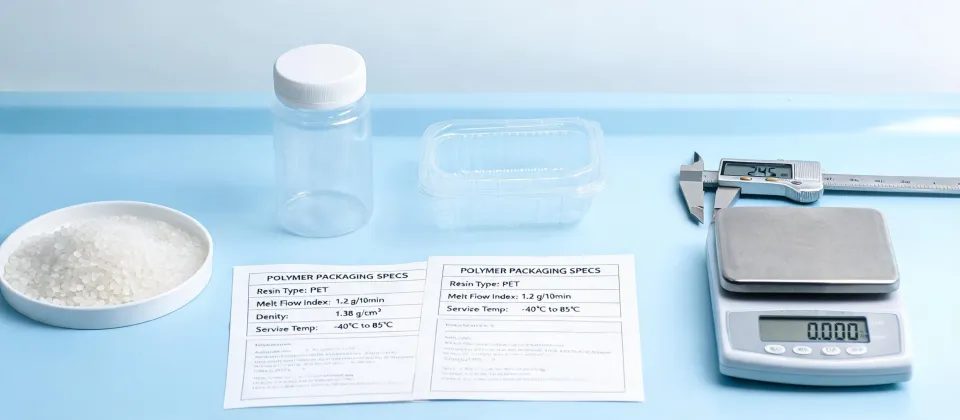
- Get a TDS (Technical Data Sheet): The supplier must provide this for the exact grade of material. This has specific numbers for tensile strength, flexural modulus, and impact resistance. Compare apples to apples.
- Ask for the Full Trade Name: Don't ask for "PP5." Ask for "a polypropylene compound with a melt flow index of X and an impact strength of Y."
- Physical Sample is King: Before a full production run, get a small sample molded from the exact material you intend to use. Don't rely on a datasheet alone.
The vendor who said, "This impact grade isn't our specialty—here's who does it better" earned my trust for everything else. Knowing the boundary of our own expertise—and the limits of a simple number like '5'—is what actually gets the job done right.
This was accurate as of my last major mistake in Q1 2024. The plastic and compounding market changes fast, so always verify current supplier capabilities and material specifications against your current needs before ordering.