JSP Plastic Products: Which Material Should You Choose for Your Next Project?
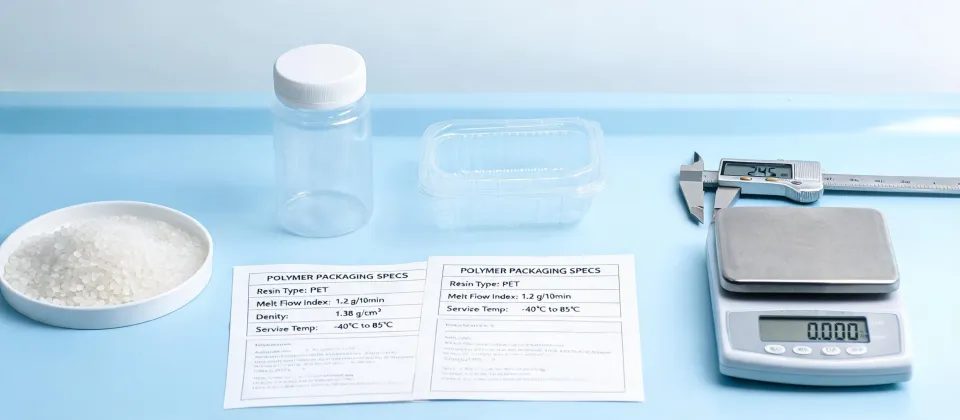
When I took over purchasing for our manufacturing facility in 2020, I quickly realized one thing: there’s no single "best" plastic. I spent weeks going back and forth between material options for different projects, trying to find the one perfect answer. Turns out, the question itself is wrong. The right question is: what’s the best plastic for this specific job?
In my experience managing supplier relationships for everything from injection molding runs to custom silicone molds, the material choice comes down to a few key scenarios. Here’s how I’ve learned to break it down.
Scenario 1: The Food Contact Dilemma (PET vs. PP)
This is the one that kept me up at night. PET and polypropylene both seem like fine choices for containers or packaging, but they’re not interchangeable. I went back and forth between these two for a new product line in 2022. PET offered clarity—great for showcasing the product. But PP had better heat resistance.
Here’s the rule I settled on after that project:
- Choose PET for cold-fill applications where you need clarity and a high-gloss finish. Think beverage bottles or deli containers. It’s also more rigid, which is good for stacking.
- Choose PP for hot-fill applications or microwavable containers. PP handles heat up to about 270°F (132°C), while PET starts to deform around 160°F (71°C). PP also has better fatigue resistance, so it’s my go-to for hinged lids.
My gut said PP for versatility, but the data said PET for clarity and cost. Ultimately, the product requirements made the decision. If it’s going in a fridge, PET. If it’s going in a microwave, PP.
Scenario 2: The Decorative Element (Epoxy Resin)
Epoxy resin pigment is a different beast. It’s not a structural material—it’s an aesthetic one. I didn’t fully understand this until a client asked for a custom silicone mold cast in a specific color. The pigments we tried weren’t designed for that application, and the results were inconsistent.
Since then, I’ve learned to separate epoxy resin into two camps:
- Clear casting resin: For jewelry, countertops, and decorative pieces. The pigment is literally mixed in to create color effects. This is where you want high-grade pigments that won’t settle or change color over time.
- Epoxy coatings: For floors, tables, and protective layers. Here, the pigment needs to be UV-stable and compatible with the coating’s chemical formula. I’ve seen projects ruined by using pigments that reacted with the hardener.
The numbers said the generic pigments were 30% cheaper. My gut said they’d be inconsistent. I went with my gut and sourced from a specialized supplier. No regrets.
Scenario 3: The Replacement Part Predicament (Custom Molding)
One of our most requested services is aftermarket plastic replacement parts. A customer’s machine breaks, the OEM part is discontinued or overpriced, and they need a reliable substitute. This is where JSP’s diverse processing capabilities come into play.
The mistake I see often is assuming you can just match the material of the original part. That’s a trap. Original parts were optimized for mass production, not necessarily for longevity or aftermarket use.
- Injection molding: Best for high-volume, complex shapes with tight tolerances. Good for replacement gears, housings, and structural components.
- Extrusion: Ideal for continuous profiles—tubes, channels, gaskets. If the original was a simple shape with consistent cross-section, extrusion is usually faster and cheaper.
- Silicone molds: The wildcard. Silicone is heat-resistant, flexible, and non-stick. It’s my choice for gaskets, seals, and parts that need to handle repeated compression.
In 2024, we had a client who needed a replacement gasket for a commercial oven. The OEM part was a standard rubber gasket that failed every 8 months. We suggested a silicone mold version. It’s been 18 months and still going strong. The upfront cost was higher, but the total cost of ownership was lower.
Scenario 4: The Supplier Search (“JSP Store” and “JSP App”)
I’ll be honest: when I first heard about online platforms for ordering plastic products, I was skeptical. The vendor who couldn’t provide a proper invoice cost us $2,400 in rejected expenses in 2021. I needed something more reliable.
Digital platforms fall into two categories for me:
- Marketplaces (like JSP Store): Good for standard products—sheeting, rods, tubes. You know what you’re getting, and the pricing is transparent. I use these for recurring orders where specifications don’t change.
- Custom manufacturing portals (like JSP App): Better for custom parts. You upload a design, get a quote, and track production. The key feature I look for is the ability to specify material grade and tolerances clearly.
Personally, I prefer the app-based approach for complex projects. The audit trail is better, and I can forward the order confirmation to finance without tracking down a separate invoice.
How to Figure Out Which Scenario You’re In
If you’re still unsure, here’s a simple checklist I use:
- What’s the primary requirement? Is it clarity, heat resistance, flexibility, or aesthetics? That will point you to PET, PP, silicone, or epoxy.
- What’s the production volume? Low volume (under 100 units) favors silicone molds. High volume (1000+) favors injection molding.
- What’s the budget? Custom molds have a higher upfront cost but lower per-unit cost at scale. Extrusion is cheap for simple shapes.
- What’s the timeline? Standard products from an online store ship in days. Custom molds take weeks.
The trigger event that changed how I think about material selection was a failed prototype in March 2023. We chose the wrong durometer for a silicone part, and it tore during installation. Now, I always test a sample before committing to a full production run. It costs a bit upfront, but it saves a lot of headaches.
There’s no perfect plastic. But there is a right plastic for your project. If you identify your scenario, the choice becomes clear.