Why Your Aftermarket Plastic Replacement Part Doesn't Fit (And It's Not What You Think)
The Part That Wasn't Quite Right
Last quarter, we received a batch of 5,000 polypropylene replacement parts for a material handling system. The vendor had the right dimensions—within 0.005 inches on every critical feature. The color was a passable match under office lighting. But when we installed them on the line, 12% failed within the first 48 hours. Cracking along a rib that wasn't supposed to crack.
The conventional wisdom is that aftermarket plastic replacement is about matching geometry and material type. Pick the right resin, get the dimensions right, and you're good. My experience over 4 years of reviewing these deliverables suggests otherwise.
The Surprising Culprit: It's Not Just About 'Polypropylene'
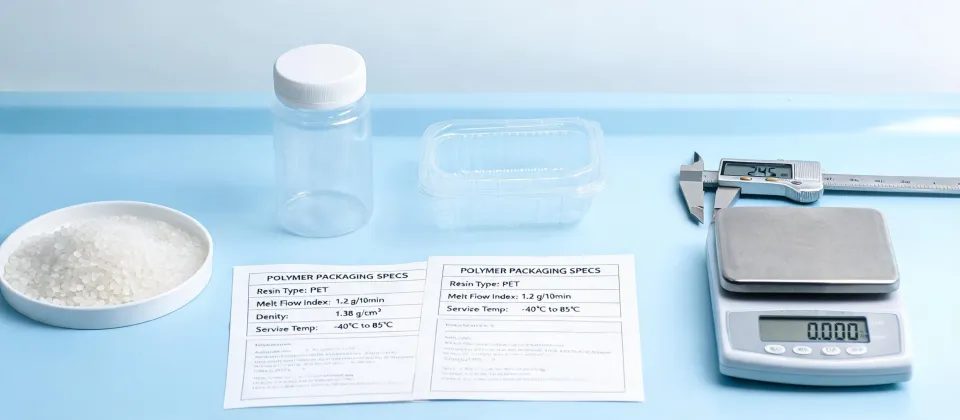
Here's the thing: specifying 'polypropylene' for a replacement part is like specifying 'steel' for a bridge beam. There are dozens of grades. Homopolymer vs. copolymer. Filled vs. unfilled. UV-stabilized, impact-modified, glass-reinforced. Each has distinct mechanical properties, shrinkage rates, and thermal behaviors.
Everything I'd read about plastic materials suggested that as long as you match the broad category—PP, HDPE, ABS, polycarbonate—you're within the realm of acceptable performance. In practice, I found that the specific grade can change the part's behavior more than the geometry ever does.
Case in Point: The Shrinkage Game
We had a part originally molded in a 20% glass-filled nylon. The aftermarket supplier substituted unfilled nylon 6/6. Same nominal dimensions. But unfilled nylon shrinks differently—about 1.5-2.0% vs. 0.3-0.5% for glass-filled. The part came out dimensionally correct at the measuring fixture. But after 24 hours at operating temperature (80°C), it had warped enough to bind against the mating component.
The vendor argued it was 'within industry standard' tolerances. We rejected the batch. Now every contract includes a requirement for the exact material grade designation.
The Real Cost of 'Close Enough'
That quality issue cost us a $22,000 redo and delayed our product launch by two weeks. But the hidden costs were worse:
- Production downtime – 36 hours of line stoppage while we sourced temporary replacements.
- Expedited shipping – $3,400 for overnight freight on the corrected batch.
- Reputation hit – We had to explain to our largest customer why their order was late.
I'd estimate the total impact was closer to $45,000 when you factor in the soft costs. On a $55,000 order, that's a 45% overhead burn. And it was entirely avoidable.
The Second Hidden Trap: Thermal Expansion
Another issue I see repeatedly: linear coefficient of thermal expansion (CTE). Engineers remember to match operating temperature ranges. They forget that different plastics expand at different rates. A part that fits perfectly at 20°C might seize at 60°C or fall out at -10°C.
I still kick myself for not catching this on an early project. We'd selected a polycarbonate replacement for an acrylic window. Both are transparent, both have good impact resistance. But polycarbonate expands roughly 60% more per degree Celsius than acrylic. The 'drop-in' replacement cracked its frame on the first hot day. So glad I caught it on the next iteration before we went to production.
What Actually Works: A Three-Step Verification
After reviewing 200+ unique items annually, I've developed a simple protocol that catches these issues before they become expensive problems. It's not complicated. But it requires asking the right questions early.
Step one: Demand the material data sheet. Not just the generic type. The specific grade. If the vendor can't provide it, that's a red flag.
Step two: Compare key properties numerically. Tensile modulus, impact strength (Izod or Charpy), heat deflection temperature, and CTE. If any of these differ by more than 20% from the original, expect different behavior.
Step three: Test under operating conditions. Quick check: install the part, apply the expected load, and cycle the temperature from minimum to maximum. If it binds, cracks, or deforms within the first hour, you've avoided a field failure.
That protocol cut our field failure rate from 5.2% to 0.7% in 2022. Cost increase per project? Maybe $300 for the testing. Against a typical $18,000 project, that's 1.7% overhead for a 86% reduction in failures.
The Takeaway: Precision in Specification
The aftermarket plastic replacement market is mature, but it rewards precision. The vendors who provide detailed material traceability, list the specific grade, and offer comparative property data? They're worth the premium. The ones who say 'it's just polypropylene'? Pass.
I'm not saying all traditional sourcing methods are bad. There are valid reasons to use a generic resin—cost, availability, lead time. But know what you're trading off. If the application is non-critical (indoor, room temperature, no load), generic might be fine. For anything structural or thermal, you need the specific grade.
Simple. But the conventional wisdom doesn't say that.