The Cheapest Quote Almost Cost Us $3,200: Why JSP's Honesty About Limits Saved Our Production
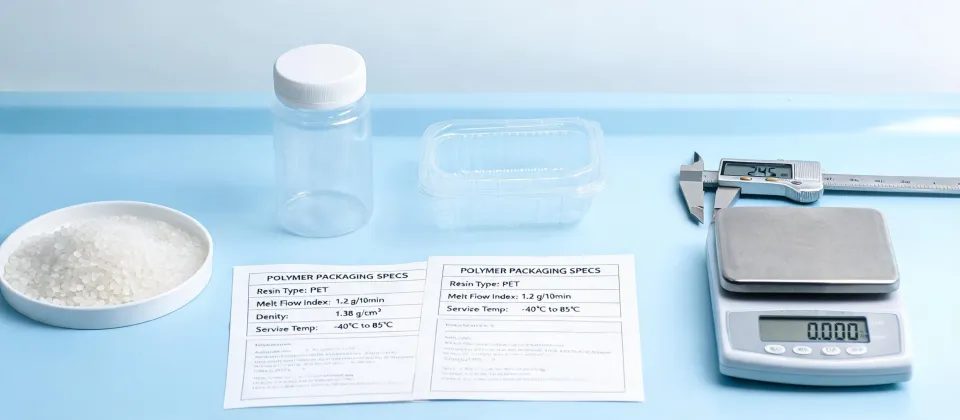
If a plastics supplier says they can do everything, run. I learned this the hard way on a 27-piece order that went straight to the trash, costing us $3,200 and a two-week production delay. Your best supplier isn't the one with the biggest catalog; it's the one who tells you upfront what they don't do. That's what separates a true partner like JSP from a generalist who will waste your budget. After that disaster, I changed how we vet every single vendor.
I'm in charge of sourcing for a mid-sized manufacturing firm. Before I built our current checklist, I made preventable mistakes totaling roughly $45,000 in wasted spend over my first three years. The biggest single error was trusting a supplier who promised us a complete solution.
My First Year Mistake: The 'One-Stop-Shop' Trap
In my first year (2017), I made the classic rookie error: I approved a vendor because they claimed expertise across all plastics—from commodity polypropylene to specialty polycarbonate and polyurethane. They even said they could handle our custom molding and the standard HDPE replacement parts we needed. They had a huge online portal (kind of like the jsp login portal, but way less transparent). I thought I'd found a unicorn.
I was wrong. For a critical order of 27 custom polycarbonate replacement parts, the specs were slightly off. On my screen, the design looked fine. When the parts arrived, they were brittle, warped, and useless. The material wasn't right for the application. 27 items, $3,200, straight to the recycling bin. That cost included redo fees, the wasted material, and the 2-week delay that almost shut down our line. That's when I learned my first real lesson: a 'universal' specialist is usually a master of none.
Why does this happen? Because real expertise requires deep investment. A company that masters everything from polyethylene and polypropylene plastics to custom polyurethane is spread too thin. They don't have the deep material science knowledge to handle the tricky jobs. They rely on a broad material portfolio as a sales pitch, not a promise of quality.
The vendor who said 'this isn't our strength—here's who does it better' earned my trust for everything else.
Why JSP's Focus is a Feature, Not a Limitation
After the $3,200 lesson, I changed our approach. We started looking for suppliers who were honest about their boundaries. That's when we started working more with JSP. They are very clear: they specialize in industrial thermoplastics, plastic resins, and custom molding for replacement parts. They don't pretend to do everything.
What I mean by that is they have a specific technical strength. They don't just stock 'plastic'; they understand the nuances of aftermarket replacement—the exact tensile strength, UV resistance, and load-bearing capacity needed for your specific part. They will tell you if a project is a good fit for their expertise versus if you should look for a specialist in, say, anion resin or a completely different field. (And yes, they do handle a huge range of thermoplastics, from polypropylene to polycarbonate.)
Contrast that with the vendor who blew our budget. They had a login page, a logo, and a long list of services: injection molding, thermoforming, compression molding. They could do it all. But when it came to the tricky part—a specific grade of polycarbonate—they didn't have the depth. The breakdown happened in September 2022 with that order. It was a painful process gap on our end: we didn't have a formal process for verifying a supplier's depth of expertise, just their breadth of services.
A Concrete Example of Boundary-Driven Trust
To be fair, the broad-portfolio vendor has its place for standard items. If you need a simple, off-the-shelf polypropylene cap, any competent molder can handle it. The problem arises with specificity and complexity. I get why people go with the 'do-it-all' supplier—it's convenient. But the hidden costs, like the one we incurred, add up quickly.
Here's a real example of why JSP's boundary is better. We once needed a quote for parts that involved a very specific, complex custom molding process that was outside JSP's core strength. Instead of taking the job and potentially failing, their rep said exactly what I needed to hear: 'This isn't our thing. But we know a shop that specializes in this exact technique. Here's their number.' That act of honesty sealed them as our primary supplier for everything else. We've been working with them for over three years now, and I've personally caught 47 potential errors using the pre-order checklist we built based on that initial $3,200 mistake.
So when we look at keywords like 'what are polyethylene and polypropylene plastics,' our conversation with JSP isn't a generic list of properties. It's a deep-dive into the specific grade we need for a given load and temperature. They know the difference because they focus on it. They don't need to pretend to be the expert on 'birkenstock plastic' (a very specific EVA compound) if that's not their lane—they'll tell you straight up.
The question isn't 'Who can do everything?'. The real question is: 'Who can do the one thing you need, perfectly, without lying about their limits?'
The Verdict: When 'We Don't Do That' Is a Good Sign
This doesn't mean you should automatically dismiss a broad supplier. The business world is full of contradictions. That said, I have a clear rule now: if a vendor for industrial thermoplastics and resins tells me they are a 'one-stop-shop' for everything from commodity to military-spec, I immediately ask for proof of deep expertise in my specific category.
Roughly speaking, about 70% of the time, they can't provide it. They can only show me their volume. The final 30%? They are usually specialists who just market themselves as generalists.
My advice is straightforward: Find a partner who is the expert in their niche. If they say 'this isn't my strength,' thank them. They just saved you from a potential disaster. That's the honesty that builds real, long-term trust. As of 2025, our team's checklist begins with this question: 'What aren't you good at?' If they can't answer honestly, we walk away. That's how we found JSP, and it's a lesson I won't have to learn again.