The Cheapest Plastic Part Is the One That Arrives on Time
The cheapest plastic part is the one that arrives on time. If you’ve ever had production stop while a replacement component sat on a truck somewhere, that sentence isn’t a slogan. It’s a math problem. A quote that can’t meet your deadline isn’t cheap; it’s just a number with extra costs attached.
I coordinate custom molding for JSP, a plastics company that supplies raw resin and builds molded parts. Some days I match a drawing to the right JSP resins; other days I schedule a JSP mold that needs to ship by Friday. Neither the material side nor the tooling side matters much if the part gets to you after the damage is done.
This crystallized for me in March 2024. A packaging plant called because a conveyor was down. The failed component was a molded TPU wiper that had split, and the original supplier no longer stocked it. The cheapest quote they found was $410 with delivery in nine days. I asked what the downtime cost. About $2,000 a day. We quoted a three-day turnaround at $790. That’s $380 more, but it also meant the part arrived six days sooner—roughly $12,000 in recovered production.
Was that a cheap part? No. Was it the least expensive solution? Yes, by a lot.
I’m not saying price is irrelevant. For a standard component with a forecast and a reliable lead time, price per piece can be the whole story. But the moment you’re buying a replacement part for a machine that isn’t running, the unit price becomes a rounding error next to the calendar.
Start With the Environment, Not a Search Term
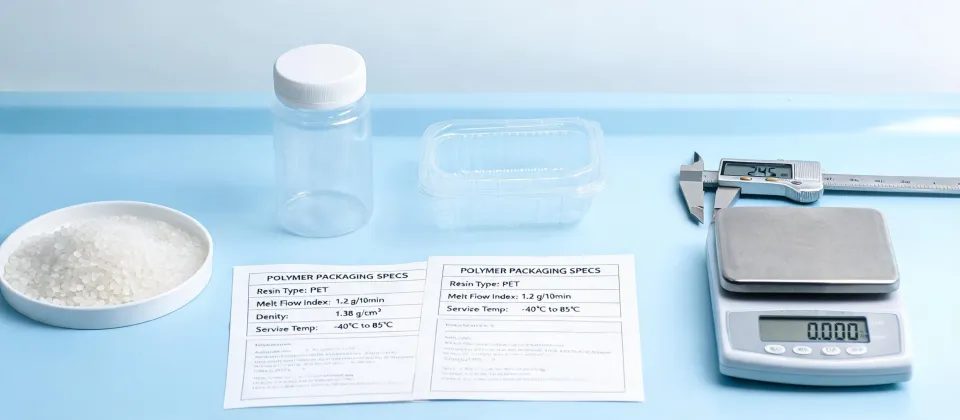
Another pattern I see every week is the material-name problem. It shows up when a customer asks for a part made of “PET 1 plastic.” I understand what they mean: polyethylene terephthalate, the stuff of bottles and clear food packaging. But the “1” is a recycling code, not a molding specification. Bottle-grade PET and injection-grade PET are both PET, and they behave differently in a mold. If you pick a material by recycling code, you haven’t picked a material yet.
“Molded TPU” creates the same confusion. Thermoplastic polyurethane is a family, not one product. A 75 Shore A TPU and a 55 Shore D TPU feel and perform nothing alike. When we design a molded TPU replacement, I start with durometer, service temperature, and what the original part was doing. A supplier who quotes TPU without asking those questions is guessing, and you’ll pay for that guess twice.
And then there’s “HDPE plastic vs polywood,” which shows up in searches constantly. It sounds like a head-to-head contest, but it’s closer to an ingredient-versus-product relationship: polywood products are typically manufactured from recycled high-density polyethylene. I’m not saying HDPE is always the winner. HDPE is an excellent choice for marine and outdoor parts if the grade includes the right UV stabilizers and impact modifiers. The problem isn’t the material family; it’s treating trade names and polymer names as if they were complete specifications.
The Slowest Part of a Rush Order Is Usually the Front End
For years, I assumed speed meant faster machines and longer shifts. Then I watched order after order get stuck in the same place: vague specs, missing dates, endless email chains. The actual molding cycle might take thirty seconds. Getting a clear answer about what to mold and when to deliver took two days.
I can trace my own change to a mistake in 2023. A repeat customer gave me a deadline over the phone, and I skipped writing it into the order. I thought we’d worked together long enough and “it’s basically the same as last time.” It wasn’t. The verbal date disappeared during a handoff, and we paid an extra $2,300 in air freight to fix a problem that never should have existed. The part was fine. My process wasn’t.
What fixed it wasn’t a bigger injection press. We rebuilt the intake flow: one digital form, the same five questions on every order, no exceptions. The first question is always the in-service date. That change eliminated a lot of the data-entry errors we used to blame on urgency. It also forced honest conversations—if a date isn’t realistic, we say so before quoting instead of after. The result was a quote turnaround that went from about two days to same-day on most requests. That isn’t efficiency for its own sake. It’s how a supplier keeps buyers from paying for ambiguity.
Before You Object
I can already hear the pushback: “You run a custom molding shop, so of course you want us to pay more for speed.” Fair enough. Rush capacity has a real cost; pulling a job ahead disrupts schedules. But my point isn’t that every order should be rushed. My point is that you should compare dates before you compare prices.
When a supplier says delivery will be nine days and you need it in three, the low piece price doesn’t matter. When a supplier commits to a date and hits it, the premium is often the cheapest thing you bought. That’s not an argument for paying whatever anyone asks. It’s an argument for making the delivery date part of the quote, not an afterthought.
Bottom Line
Next time you search for “HDPE plastic vs polywood” or send along a drawing for a molded TPU part, do one thing first: write down the date the part has to be running. If that date is urgent, compare suppliers on their confirmed schedule, then bring price into the room. If the delivery date doesn’t fit, every lower quote is just a more expensive delay in disguise.
Take it from someone who has paid the air-freight bill and watched the line sit idle: the cheapest plastic part is the one that shows up when it was promised. Everything else is a cost center wearing a part number.