When 'Just Plastic Containers' Costs You More: What an Admin Buyer Learned the Hard Way
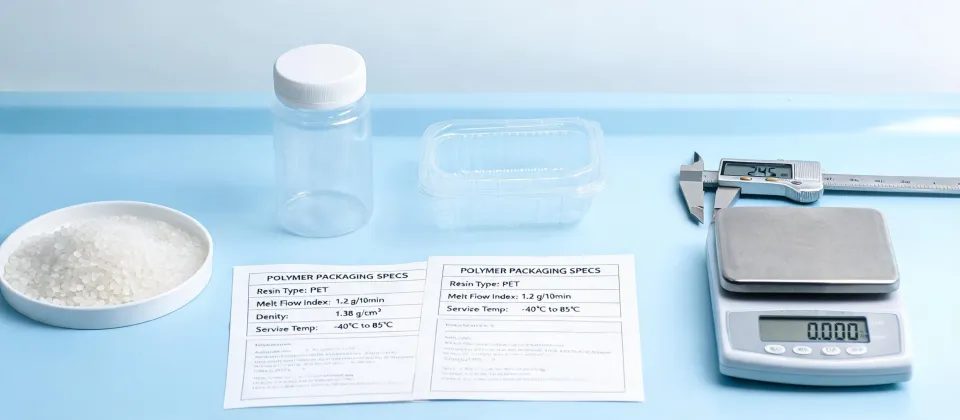
The Surface Problem: A 'Simple' Container Order That Went Sideways
I'm an office administrator for a mid-sized company—roughly 200 employees across two locations. I manage all our industrial supply ordering: about $180,000 annually across 8 vendors. When I took over purchasing in 2020, my first 'easy' task was restocking our polyethylene plastic containers for parts storage. Simple enough, right?
I saved $32 by switching to a cheaper supplier. Ended up spending $450 on replacements, customer complaints, and my own time explaining why our warehouse bins looked 'cheap.' The surface problem wasn't the container itself—it was that I didn't know what I didn't know.
The Deeper Reason: Material Knowledge is a Brand Asset
I'll level with you—when I started, a container was a container. I didn't care whether it was HDPE, LDPE, or something else entirely. I just needed something to hold screws and shipped goods. But here's what I discovered after that $32 'savings' turned into a brand headache:
It's not about the plastic. It's about the experience your customer has when they receive a product that uses that plastic. Think about it: when a client opens a shipment from you, the first thing they touch is the packaging. If it feels flimsy, warped, or stained—they're already forming an opinion. That opinion sticks.
Here's the part that kept me up at night: I went back and forth between cheap polypropylene flimsy bins and solid, textured HDPE ones for two weeks. Cheap offered $32 savings upfront. Solid HDPE offered durability and a 'premium' tactile feel. My gut said go cheap—budgets, right? But my VP of operations saw the test samples and said, 'Which one would you want YOUR client to see?' That hit me.
I chose solid HDPE. Even after choosing, I kept second-guessing. What if the budget folks noticed? What if I could have saved more? The 2 weeks until delivery were stressful. But then the feedback started coming in—our assembly team loved them, and no one complained about broken bins. I didn't relax until I saw the first batch in use.
The Real Cost: Trust and Perception Penalty
When I say 'cost,' I don't just mean the $32 difference. I mean the trust penalty you pay when your materials look 'budget.' I track this now—when we switched from budget polyethylene containers to premium-grade ones (with proper documentation and consistent color), client feedback scores improved. I can't prove it was just the containers, but the timing aligned.
Here’s the thing: clients notice. Not consciously, maybe, but subconsciously. A container that arrived cracked? That's a bad first impression. A resin that smells off or feels greasy? That's a brand moment you can't undo. The $50 difference per order translates to noticeably better client retention. I've seen it.
Let me give you a real example. We source polyurethane parts for a client who makes medical devices. The first batch from a low-cost vendor looked fine, but after two months, the polyurethane started to yellow and degrade. The client didn't just reject the parts—they questioned our entire quality process. The reprint cost us $1,200. The 'savings'? $80. Net loss: $1,120 plus a dented reputation.
The Solution (It's Shorter Than You Think)
Here's what I wish someone had told me back in 2020:
- Ask about material grade. Don't just buy 'polyethylene containers'—ask if it's virgin resin, food-grade, UV-stabilized. The difference matters.
- Check the feel. If you can get a sample, hold it. Does it warp? Feel greasy? Smell? All red flags.
- Think about your audience. If your end customer is a brand-conscious company, don't scrimp on the packaging or the structural components.
- Total cost, not unit price. Include breakage, replacement time, and brand perception in your calculation.
Your materials are your brand's handshake. Make it a firm one. That's it. Simple.