Why Your Next Plastic Supplier Should Be Your Last: A Quality Manager's Take on JSP Products
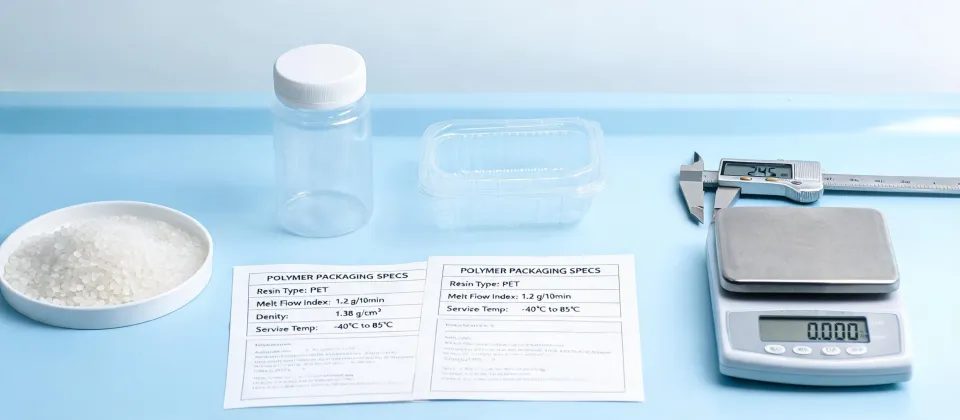
Let's Talk About the 'Cheaper' Supplier
I've been a quality compliance manager in the plastics industry for a while now. Roughly 1,200 production samples cross my desk every year—injection molded parts, extruded sheets, custom compression molded components. I review them, sign them off, or send them back. I've rejected about 8% of first-run articles in 2024 alone, mostly due to dimensional drift or the wrong material spec being used.
So when someone asks me about choosing a plastic resin manufacturer, I don't start with the sales pitch. I start with the screw-ups. Specifically, the ones I've made myself.
And one of the biggest? Assuming 'just as good' actually means the same thing when it comes to plastic resins. Honest, I'm not sure why we as an industry keep making this mistake. My best guess is it's a combination of time pressure and a slightly optimistic reading of a technical data sheet.
"I assumed 'same PP grade' meant identical material properties across suppliers. Didn't verify. Turned out the melt flow index varied enough to affect our dimensional consistency on a critical assembly."
That cost us a $12,000 re-run and pushed a launch back by two weeks. Which brings me to why I'm writing this. If you're evaluating jsp products or any other supplier in the aftermarket or replacement parts space, this is the stuff you need to dig into before you sign a PO.
The Real Problem Isn't Price—It's Spec Interpretation
Most buyers I talk to start with a surface-level question: "Who has the best price on polypropylene?" Or, "Can you match this polycarbonate part?". They think the problem is finding a supplier. But the deeper problem is that specs are not universal.
Let me explain. A standard injection molding tolerance per ASTM D3641-22 is ±0.003 inches per inch for basic materials like PP or HDPE. That sounds fine, until you're trying to press-fit a replacement part into an existing assembly. That 0.003 inch per inch tolerance? A mold shrinkage rate per ASTM D955 can make that worse. You order a part that's 10 inches long. Your supplier says it's within spec. But your assembly line says it's a millimeter too big. Who's right?
The spec sheet. Always. If you didn't lock down the interpretation, you lose.
I've never fully understood why some manufacturers don't make this clearer in their quoting process. It seems like basic quality assurance to say, "Here are our default tolerance for this material, but we can tighten it to X for Y cost." But many don't. They just quote a price based on a PDF you sent them.
The Hidden Cost of Loose Specs
When I say I've rejected 8% of first articles in 2024, the hard cost was around $45,000 in rework and express shipping on one project alone. But the softer costs are worse: lost time, strained relationships with your own production team, and a lingering doubt about JSP products or any other brand you're trying to qualify.
The third time I ordered a batch of HDPE replacement brackets and they came back 0.015 inches undersized, I created a formal spec verification checklist. Should have done it after the first time. The checklist forces us to compare the supplier's quoted tolerances against the ASTM standards and our own internal needs. It adds maybe 20 minutes to the procurement process. But it's saved us an order of magnitude more in headache.
The Value of a Broad Material Portfolio (When It's Backed Up)
One area where companies like JSP genuinely stand out is in their material portfolio. Having a wide selection of industrial thermoplastics on paper is one thing. But having the technical expertise to actually mold them consistently is another. I've seen a supplier list 20 resins on their website but only have actual production experience with three. The rest are on a wish list.
So when you're vetting a plastic resin manufacturer, ask for the data. Ask for a process capability study (Cpk) on their most common materials. If they look at you like you're speaking a foreign language, that's a red flag.
"The numbers said go with Supplier B—12% lower cost with comparable ASTM test results. My gut said the difference would show up in production. Turned out their processing window for polycarbonate was narrower, leading to higher scrap on complex geometries. My gut was right, but I still should have asked for the Cpk upfront."
Let's Talk About 'Resin Mold Ideas' and Realistic Expectations
I see a lot of people searching for resin mold ideas and thinking they can just grab any plastic and pour it into a silicone bakeware mold. That's a whole different world. That's resin casting, not injection molding. The keyword can you bake in silicone molds is a classic newbie question.
For the record, generally no, unless you're talking about specific food-grade silicone and oven-safe resins. But for industrial applications, this confusion between casting and molding leads to bad decisions. Injection molding is a high-pressure, high-heat process with very specific material requirements. It's not a craft hobby.
The Bottom Line: JSP Products in Context
So where does all this leave us? If you're looking at JSP products for your next project—whether it's a custom molding run or a simple replacement part—here's my advice, learned from experience:
- Verify the spec interpretation. Don't assume. Ask for the specific tolerances they're quoting against, and compare it to your own requirements.
- Test the communication. Send them a tough question. See how they respond. If they're evasive or don't offer a technical answer, that's a warning.
- Use a spec checklist. It's boring but it works. Document exactly what you expect for material grade, shrinkage, tolerance, and finish.
- Don't be cheap on the first run. Pay for a proper first article inspection. It's cheaper than a re-run.
An informed customer asks better questions and gets better results. I'd rather spend 30 minutes on the phone explaining options than deal with a mismatched shipment later. JSP seems to offer a solid technical backbone for polypropylene, polycarbonate, HDPE, and polyurethane needs—but the key is to hold them (and yourself) to a clear, verifiable standard.
That's it. No magic bullet. Just a process that's been tested by mistakes—including my own.