JSP Resins, Printed Plastic Bags, and Plastic Hinges: What to Do When You're Out of Time
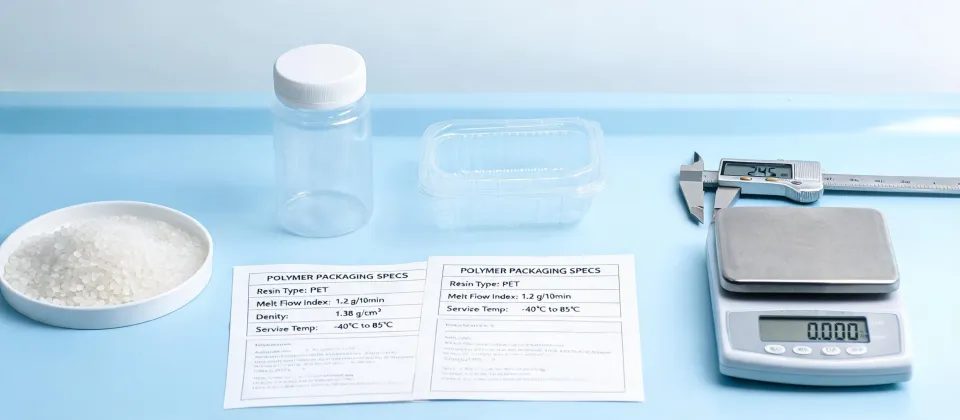
In my role coordinating rush orders for molded and flexible plastic parts, I've handled more than 200 urgent deliveries over the last decade. The first thing I tell every caller is this: there's no standard answer. It depends on what you're holding—a bag, a hinge, or a resin decision.
So I'm going to walk you through three common scenarios. If you're trying to get custom printed plastic bags, replace a plastic hinge, or source JSP resins quickly, the move that works in one situation might be exactly wrong in another. That's not a marketing line. That's the reality of a deadline.
Scenario 1: You Need Custom Printed Plastic Bags for an Event
The most time-sensitive question we get is about printed plastic bags. A plain bag is not the same as a bag with your logo. If you're preparing for a retail drop, conference, or trade show, the bags are worthless if they arrive after the doors open.
First, find out whether the film is in stock. JSP keeps a range of stock films for printed bags, and printing on stock film is much faster than waiting for a custom extrusion. If you need a special barrier layer or a custom color, expect a longer lead time and a higher rush premium. According to publicly listed online printer fee structures, next-business-day rush work can run 50-100% over standard pricing. It hurts, but it's often cheaper than the event falling flat.
Printed bags also come in different resins. HDPE film gives a crisp, economical feel. LDPE is softer and more flexible. PP film looks clearer and glossier. For a rush job, you probably won't get to pick all three—you'll get whatever film is in stock that can handle ink.
When you're reviewing the proof, don't do it on your phone. The standard for commercial print is 300 DPI at final size, and for large-format graphics you can sometimes drop to 150 DPI. If someone sends a 72 DPI file, that's a red flag. Also, if you need a specific brand color, ask for a Pantone-specific proof. Industry tolerance for brand-critical colors is Delta E under 2; anything above 4 is visible to most people. Reference: Pantone Color Matching System guidelines.
Here's a real one. In March 2024, a client called at 9 pm needing 1,000 printed bags for a product launch 36 hours later. Normal turnaround was five days. We found a printer with stock film, paid an $850 rush fee on top of the $1,200 base cost, and the bags were at the venue by 10 am. The alternative was handing out plain bags at a launch that had already cost $40,000. You don't have to eat that cost every time, but you need to know the tradeoff.
I said 'as soon as possible' to a printer once. They heard 'whenever convenient.' The bags arrived two weeks later. That was on me. I should have given a date and a penalty clause.
If this is your situation, check the JSP app for stock bag film and proof deadlines. Then send your Pantone number and get a written confirmation of the delivery date. Don't call five suppliers and hope. Pick one with actual stock.
Scenario 2: You Need Plastic Hinges Replaced, Fast
Plastic hinges fail for a reason. A hinge on a machine cover or enclosure breaks, production stops, and suddenly you need a molded part that can flex without cracking under repeated use. This is different from packaging, and it needs a different decision tree.
The biggest mistake is assuming all plastics bend the same. They don't. Polypropylene is the classic living-hinge material because it can survive thousands of flex cycles. Acetal and nylon are better choices when the hinge has to carry a load or slide against another part. ABS works for a cover that gets opened occasionally, but I wouldn't trust it for a hinge you'll open every day. This is not an attack on ABS—it's just a matter of matching the material to the motion.
For a rush replacement, I ask whether you need a temporary fix or a production run. If it's temporary, a 3D-printed hinge in nylon can hold things together for days or weeks. If it's production, you want injection molding or compression molding with a resin that has documented flex-fatigue data. That's where JSP resins come in. Their data sheets include melt flow information specifically so you don't have to gamble.
The hinge's cross-section is super important too. A living hinge needs a thin, flexible section along the bend line. If your replacement is too thick, it won't bend. Too thin, and it snaps. Measure the old part's geometry before you order, and remember that the resin supplier's data sheet only tells you part of the story.
A mistake I'll own: I once assumed 'same specifications' meant identical results across vendors. Didn't verify. Turned out the melt flow was different, and the hinge cracked under stress. Now we verify the data sheet, not the label.
If you're in this scenario, don't wait to confirm the material data. Get the resin's flex-fatigue rating, the lead time for the mold, and a sample if possible. The JSP app can show you current inventory for the resin grades we carry, which saves a lot of back-and-forth.
Scenario 3: You're Sourcing JSP Resins and the #5 PP Microwavable Question Came Up
Maybe you're not molding a hinge or printing a bag. You're buying raw resin for a food container, and someone on your team asked, 'is 5 pp plastic microwavable?' Let's settle it.
PP, recycling code 5, is a common microwave-safe plastic. But the code alone is not enough. The finished container's microwave safety depends on its additives, colorants, and lid material. A clear PP container with a food-contact label is not the same as a recycled PP bin or a colored takeout lid. So if you're asking about JSP resins for a food-grade part, ask for the resin's FDA food-contact status. The U.S. Food and Drug Administration regulates food-contact substances, and PP has a long history of accepted use—but you still need to verify the specific grade.
Also, don't just test with water. Fats and sugars reach higher temperatures than water, so run your real food in the container if you're planning to microwave it. A label that says 'microwavable' means the container was tested for that kind of use. If the product you're designing hasn't been tested, don't put a microwave symbol on it.
During a rush order, the best resin is usually the one that's in stock. We built the JSP app to show live inventory and lead times for JSP resins, because guessing rarely works. If the app says the resin is available, we can move forward. If it says 'lead time' instead of 'in stock,' don't promise the client an unrealistic date.
There's something satisfying about a rush order that lands on time. After all the stress and coordination, seeing it delivered correct—that's the payoff. But the payoff only happens if everyone agrees on terms up front.
How to Tell Which Scenario You're In
Here's the ten-second triage I run on the phone.
- If you're dealing with a bag, pouch, or packaging, this is scenario 1. Focus on film stock, Pantone colors, and proof deadlines.
- If you're dealing with a moving part, especially a plastic hinge, this is scenario 2. Focus on flex-fatigue, resin data, and whether a prototype will hold.
- If you're buying raw material for a container, or someone's asking about microwave safety, this is scenario 3. Focus on food-contact status and the finished part's additives.
This sounds basic, but I've seen enough triage calls go sideways because someone mixes up 'food-safe resin' with 'safe to microwave.' They're related but not the same. A food-contact layer can be microwave-safe while a colored lid isn't. And a #5 PP container from one manufacturer can behave differently than a #5 PP container from another.
If you're still not sure, get a data sheet before you request a quote. An informed customer asks better questions and makes faster decisions. I'd rather spend ten minutes explaining options now than deal with mismatched expectations after the order ships.
Bottom line: there's no single answer for printed plastic bags, plastic hinges, JSP resins, or the 'is 5 pp plastic microwavable?' question. The answer depends on the scenario you're in. Figure that out first, verify the data, and don't assume 'soon' means tomorrow.