Why Paying for Delivery Certainty Is the Smartest Procurement Move (Even for Resins and Molds)
When a supplier quote comes in 20% lower, it's tempting to jump. But after five years of managing procurement for a 400-person company, I've learned that the cheapest quote is often the most expensive one—especially when you're working against a deadline. I'm not talking about office supplies. I'm talking about custom plastic parts: silicone mold making, plastic gears, and critical components made from jsp resins. In a time crunch, paying extra for guaranteed delivery isn't a luxury—it's the rational choice.
Why I'm Qualified to Say This
I'm the office administrator for a mid-sized equipment manufacturer. I manage all our non-production purchasing—roughly $200,000 annually across 8 vendors. I report to both operations and finance. When I took over purchasing in 2020, I almost went with the lowest bidder for a custom gear order. It was 18% cheaper than the incumbent. The order arrived three weeks late. I had to explain to my VP why our repair line was down. Cost of that delay: about $9,000 in idle labor. We paid $1,500 extra on a rush order to a supplier like jsp resins that could actually deliver. That $1,500 was the best money we've spent.
Everything I'd read about procurement said always get multiple quotes and pick the best price. My experience with 200+ orders suggests that relationship consistency often beats marginal cost savings. That was a hard lesson. In March 2024, we needed a silicone mold making run for a new product. One vendor quoted $800 with a 10-day lead. Another quoted $1,100 with a 5-day lead. I went with the $800 because we had some schedule slack. Then the first vendor's “10-day lead” turned into 18 days because they “had a material shortage.” We ended up shipping late and ate a $2,000 penalty from our customer.
Real Examples from My Inbox
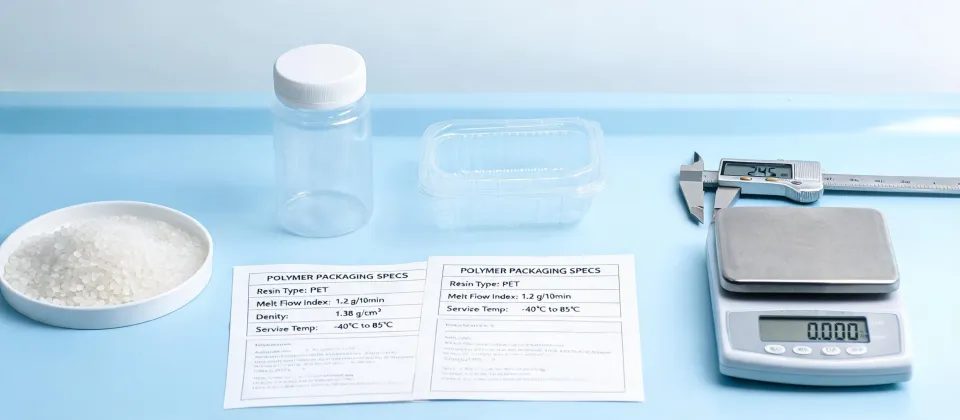
Another time, we ordered plastic gears for a prototype—the vendor promised “standard quality,” but we didn't verify material specs. The gears stripped after 200 cycles. When we asked for data, they couldn't provide a melt flow rate test. That's when I learned never to assume “same specifications” means identical results across vendors. Each had slightly different interpretations of “standard.”
And here's a question that pops up more than you'd think: Can you microwave plastic containers? A colleague asked me that after we ordered some branded deli containers. The cheap supplier couldn't tell us if their material met FDA migration limits. We had to throw out 2,000 units. The rep said, “It's probably fine.” Probably isn't good enough when it comes to food contact.
We even printed our jsp logo on those containers. The logo smeared after one dishwasher cycle—wrong resin, wrong ink combination. That was a pure procurement failure. We saved $300 upfront and lost $1,200 in reorders plus the embarrassment.
Why the Markup Is Worth It
Rush premiums sound painful until you run the math. In commercial printing, rush service typically adds 50–100% over standard pricing (based on major online printer fee structures, 2025). Plastic molding follows a similar pattern—except the downside is bigger. A mold that's a week late can idle an entire assembly line. The cost of that downtime dwarfs the rush fee.
For microwave-safe containers, regulators require actual testing. According to FDA 21 CFR Part 177, polymers used in food-contact articles must meet specific migration limits. A supplier who can't provide that documentation is a red flag, no matter how cheap they are. That's not being paranoid—that's compliance.
When It's Actually OK to Take the Risk
Now, I'm not saying you should always blow your budget on the premium supplier. If your order is for a standard part with a 3-month lead time and you have inventory slack, by all means, shop for the best price. Or if you're buying commodity items like trash bags or basic signage, the low-cost vendor is fine.
But when you're dealing with technical components—especially anything related to jsp resins, silicone mold making, or plastic gears—don't gamble on delivery. I've seen this pattern repeat too many times. The expensive sure thing is almost always cheaper than the cheap uncertainty.
At least, that's been my experience. Your mileage may vary, but if I remember correctly, we haven't missed a deadline since we stopped negotiating over every last dollar. And that's worth a lot more than any 5% savings.