The $4,300 Mistake: How Cheap Plastic Components Nearly Wrecked Our Brand
I manage purchasing for a 400-person manufacturing company. Roughly $450,000 in annual spending across 8 vendors and 3 locations. And two years ago, I almost signed off on a decision that would have cost us a lot more than money.
It started with a seemingly obvious win. A new supplier quoted us injection-molded plastic replacement parts at $0.40 apiece less than our regular vendor. For a 500-piece order, that's $2,000 in savings. Spread across the year, it could be $8,000. I was ready to look like a hero to my finance team.
My ops manager asked a question I couldn't answer: "What resin are they using?"
I had no idea. And that gap in knowledge nearly turned a "great deal" into a brand disaster.
The Real Problem: Plastic Is Not a Commodity
Here's the thing nobody tells you when you start managing procurement: plastics look similar, weigh similar, and appear identical on a spec sheet. But they are not the same material.
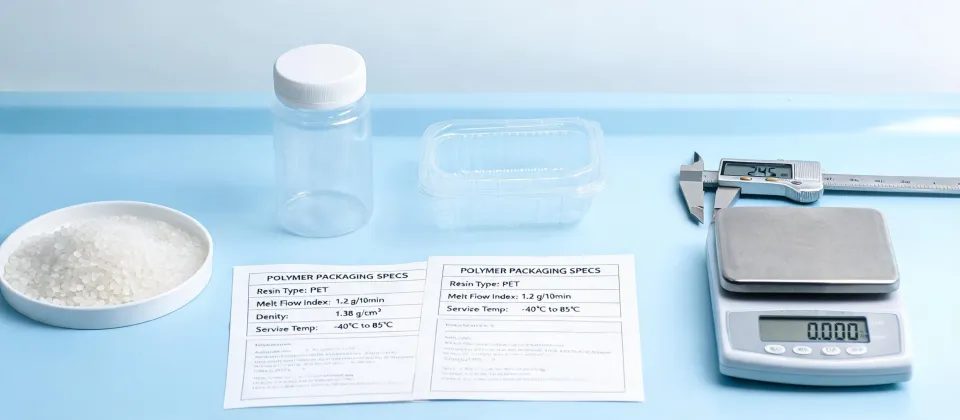
Take the classic comparison: resin vs acrylic. On the surface, both can be clear and moldable. But "resin" isn't a single thing. It's a whole family—polypropylene, polycarbonate, HDPE, ABS, PET—each with different tensile strength, chemical resistance, UV stability, and melting points. Acrylic is its own category entirely. Great optical clarity, but it fractures more easily than polycarbonate under impact. If your component needs to withstand physical stress, acrylic is a liability. If it needs chemical resistance? PET products are often a better fit. There's no universal answer.
It's tempting to think you can just compare unit prices across vendors. But identical-looking parts can be made from radically different materials. The "always get three quotes" advice ignores the one variable that actually matters: whether all three quotes are for the same thing. They usually aren't.
The oversimplified view—"plastic is plastic"—is exactly how companies end up with parts that crack, deform, or fail on the job. And the cost of that failure never appears on the initial invoice.
Why This Is Actually a Brand Problem
This isn't just a procurement problem. It's a quality perception problem. I know that sounds dramatic. Bear with me.
Customers don't know what resin you used. They know the part cracked on month two. They know the finished product failed. And that failure becomes your brand in their mind.
A $1 difference in material cost sounds like smart purchasing—until the finished product ends up in front of a customer and fails. Then the $500 sales relationship, the $14,000 annual account, the referrals you'd have gotten—that's the real cost. The $50 difference per project translates into a lot more than $50 in client retention. I didn't fully believe this until I lived it.
My $4,300 Reverse Validation
Everyone told me to check material specifications before approving purchase orders. I didn't listen. Once. That was enough.
Back in 2022, I was consolidating our vendor list. My VP wanted 8 vendors down to 4, and I found a supplier offering polyurethane replacement parts at a price that looked too good to pass up.
Here's where I messed up. Their spec sheet said "industrial polyurethane." I assumed that was sufficient. I didn't verify the hardness rating. Didn't ask for test data. Didn't check the ASTM standards.
The original parts from our regular supplier were 95 Shore A hardness. The "cheap" replacement was closer to 70. In practice, that meant the parts deformed under load within about 60 days of installation. We had to replace the entire batch. Then we had to replace the replacements.
Total cost: $4,300 out of my department budget. The initial "savings" of $2,100 turned into a 104% loss. Put another way: I paid double to end up with worse parts than if I'd bought the right spec the first time. Exactly what I needed to learn, the expensive way.
The Air Hose Disaster
That wasn't my only mistake. A few months later, I ordered a batch of compressed air hoses from a bargain supplier. Externally, they looked fine. Same size, same fittings, looked exactly like the ones we'd used for years.
The problem: the rubber compound degraded when exposed to oil on the shop floor. Three months in, we had 14 hose failures in a single week.
Production stops. Angry technicians. My phone exploding all day. The parts department asking what the hell we were thinking.
No one on the shop floor cares about the $300 we saved. They see failures, and those failures have a name: our company's brand.
What Actually Fixed This
After those two incidents—or rather, after owning both of them in front of my operations team—I changed how we buy entirely.
We standardized on suppliers who could answer three questions without hesitation:
- What exact material is this? Family, grade, hardness, and any additives. Not "industrial grade." The actual thing.
- What testing confirms that? ASTM D638 for tensile strength, D471 for oil resistance in hose compounds. Show me the data.
- What happens if it fails? Written warranty terms, not verbal assurances.
It sounds basic. It's not. I've put those questions to dozens of suppliers, and the ones who hesitate are exactly the ones to avoid.
That's how we ended up working with jsp resins llc on the molding side. Not because their quote was the lowest—it wasn't. Because they could actually talk about materials. When we asked about jsp mold services for a replacement component, their engineer didn't just quote a price. He flagged that the original part's resin grade was discontinued, then recommended a substitute with better impact resistance. Same application, better durability, comparable cost.
That kind of technical input is rare. And it saved us from a failure we hadn't even anticipated.
For our air hoses, we switched to a manufacturer who tested their compounds against the specific fluids they'd encounter on our floor. The hoses cost more. The failures? Zero. Zero in 18 months. That's not a coincidence.
The Bottom Line
If you're responsible for purchasing decisions, here's what I need you to take from this: the cheapest quote is rarely the most cost-effective decision. The part is cheap. The failure is expensive. Seriously—expensive.
Check the material. Ask for data. Run the ASTM test numbers. And if a supplier can't explain what's actually in your component, walk away. Trust me on this one. The $50 difference per order translates into more than $50 in customer trust. Way more.
Quality isn't just a feature. It's the quiet foundation of your brand's reputation. Protect it with specifications, verification, and suppliers who understand materials. That's the advice that sounds expensive and turns out to be the cheapest option of all.