The $1,400 Flexible Plastic Sheet Order That Taught JSP Resins LLC a Real Quality Lesson
The Order That Should Have Been Routine
Last January, I stood in our warehouse with a roll of flexible plastic sheet that should have been fine. It wasn't.
If you've ever bought flexible plastic sheet for a project, you know the feeling of trusting a spec sheet. Our customer trusted JSP Resins LLC that day. They had ordered 500 feet of 30-mil black HDPE sheet with a matte finish and a resin paper interleave. Their only technical question was short: 'Is plastic polyethylene?'
It's a fair question. Polyethylene is one of the most common plastics in the world, but 'plastic' is a big family. The short answer is sometimes. The longer answer is: for this product, you wanted HDPE, not just any polyethylene. That's where our story gets complicated.
I'm a quality and compliance manager at JSP Resins LLC. I review roughly 200 production batches a year before they ship. In Q1 2024 alone, I rejected 9% of first-run batches for things like thickness variation, surface defects, and off-color. I'm not writing this as a corporate blog post. I'm writing this because I almost let a small order slip through, and it would have cost the customer much more than the $1,400 we charged.
The Mistake I Almost Let Slip
When I first saw the work order, I assumed it was simple. A standard HDPE flexible plastic sheet, 30 mil, black, with resin paper interleaving. We've run hundreds of these. There was one catch: production needed the material fast, and the normal HDPE blend was still in transit. Someone in the shop pulled a roll from our rework rack. The tag said HDPE. The color was right. The roll even had our JSP logo on the core. And because the order was small, nobody asked me to verify before the line started.
That was my mistake. I knew I should have walked to the rack and checked the spec against our approved resin list. But it was a small order and the tag looked fine, so I thought, what are the odds? The odds caught up with us.
The line produced the flexible plastic sheet, rolled it with resin paper, and put it on the inspection table. The thickness was right. The color was right. But when I picked up a sample, it didn't feel right. It was soft—too soft. HDPE has a certain snap. This sample draped like a shower curtain.
The most frustrating part was the paperwork. The tag said HDPE. The batch record said HDPE. But the material in my hand was acting like low-density polyethylene—probably LDPE or LLDPE. You'd think a label would guarantee the truth, but a label is only as good as the person who wrote it.
Side by Side, the Difference Was Obvious
I cut a sample and ran a quick density check. In our lab, we use ASTM D1505 for density and ISO 1183 as a cross-check (source: ASTM International, astm.org; International Organization for Standardization, iso.org). HDPE should fall roughly between 0.950 and 0.960 g/cm3. My sample came in at 0.923, which is solidly in the LDPE territory. That's not a rounding difference. That's a different material.
Then I did what I should have done earlier: I put the reference HDPE sample next to the suspect roll. Side by side, the difference was obvious. The bad roll was a little shinier, a little more flexible, and when I squeezed the edge, it didn't spring back the way the reference did. Seeing the two together, I finally understood why every detail in a spec matters.
The customer's question—'Is plastic polyethylene?'—suddenly became more important. Polyethylene, yes. But the application needed the stiffness and chemical resistance of HDPE, not the flexibility of LDPE. If we had shipped the soft blend, the sheet could have deformed under load or pulled away from fasteners. The customer would have blamed the material, not the chemistry.
Why We Didn't Ship It
Part of me wanted to let it go. The customer was waiting, and the roll might have worked in a less demanding application. Another part, the part that has rejected dozens of batches, whispered that specs are specs. A small order doesn't change that.
We rejected the batch, explained to the customer exactly what happened, and ran the order overnight with the correct HDPE blend. It arrived two days late, but it arrived right.
The customer didn't get angry. They said thank you for catching it. Then, six months later, they came back with a $14,000 order—no sample requested. That is the result you want from a quality process, but it doesn't happen if you treat the $1,400 order like an afterthought.
What I'd Tell Anyone Buying Flexible Plastic Sheet
If you've ever asked a supplier, 'Is plastic polyethylene?' you're asking the right starting question. But before you order, ask what kind. HDPE, LDPE, PP, PVC, and PET are all plastics, and they behave differently. For a flexible plastic sheet that needs strength, HDPE is usually a good choice. For a soft bag or a liner, LDPE might be better. The resin determines the result.
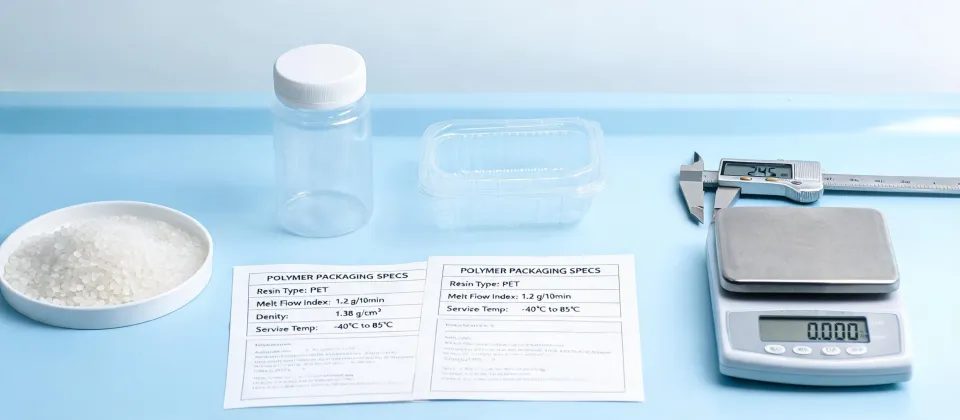
Also, don't be afraid to ask for the material test data. A reputable supplier will share the density, melt flow index, and thickness tolerances. If they hesitate, that's a red flag. We now include this data on every certificate of conformance, even for small orders.
And in my own shop, we fixed the process. No roll gets pulled from rework without a sign-off from quality. The JSP logo on our outgoing boxes represents that.
Trust me on this one: small orders are not small to the person waiting for them. The vendors who treated my $200 orders seriously when I started out are the ones I still use for $20,000 orders. Take it from someone who reviews specs for a living—do the right thing on the small ones, and the big ones will follow.
Small doesn't mean unimportant—it means potential.