Plastic Tubes, HDPE Pipe, and the JSP App: Why I Stopped Trusting Labels
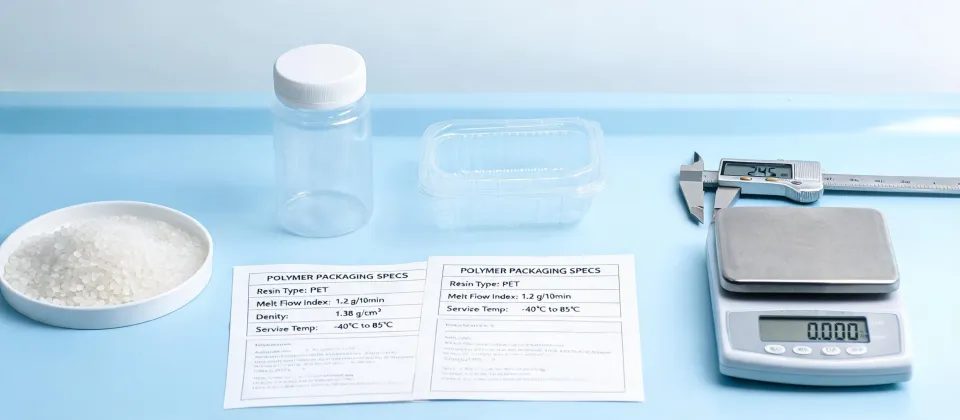
I have an unpopular opinion in procurement circles: most material mistakes aren't caused by choosing the wrong product. They're caused by trusting the wrong label.
For the past 11 years, I've handled material sourcing and specification reviews for a custom molding and pipe fabrication shop. I've personally made—and documented—14 significant mistakes, totaling roughly $38,000 in wasted budget. Some were expensive. Some were embarrassing. All of them taught me something about how quickly "standard" products can become very non-standard in the real world.
Back in 2014, material verification meant a signed certificate of analysis and a handshake. That worked, until it didn't. The trigger event for me was September 2022. A material change that no one flagged cost us three days of production and one very awkward customer call. It changed how I think about every plastic tube and HDPE pipe order that crosses my desk.
The Label Is Not the Material
Everyone asks: what number plastic is polypropylene? The short answer is 5. As of January 2025, polypropylene is resin identification code 5 under ASTM D7611, the standard practice for coding plastic manufactured articles. HDPE is code 2. But knowing the number is not the same as knowing the part. A polypropylene label on a packing slip is a starting point, not a confirmation.
I learned this in 2021 on a $3,200 order of plastic tubes. We had specified polypropylene for chemical resistance. The packing slip said "PP." The batch tag said "HDPE." I didn't check. They're both polyolefins, so they look similar. The tube failed our client's solvent test.
Scrap.
A one-week delay. A phone call I still remember. Not ideal. Not "we'll fix it later." Expensive. That order should have taken ten minutes to verify. We had a JSP login. The portal had the batch documentation. I just didn't use it because I assumed "PP" on the slip was good enough.
The surprise wasn't the price difference. The surprise was how easy it would have been to avoid. Put another way: we didn't have a material problem; we had a verification problem.
Portals Are Not Bureaucracy; They're Memory
Here's where my thinking changed. I used to treat supplier portals as necessary evils. Log in, download a PDF, print it, file it. Done. Now I treat them as the closest thing we have to institutional memory.
The JSP app (the mobile version of the portal) lets me pull batch-specific documents from the warehouse floor. I don't have to walk back to the office to dig through a binder. I can check a certificate of analysis, a resin code, or a dimensional test report while the forklift is still parked in front of me. That level of access sounds small until you're standing next to a pallet of plastic tubes trying to decide whether to sign the receiving slip.
This matters more than it sounds. In September 2022, we had a production delay because the printed datasheet in our binder came from the pre-2020 product line. Same material name, different spec range. What I mean is: the material family hadn't changed, but the performance limits had. A paper binder doesn't tell you when something is outdated. A digital portal at least has a chance to.
Now the JSP login is the first thing I do when a delivery arrives. (Should mention: we got burned once. After that, we added a digital pre-check to our receiving checklist.) It takes about four minutes per item. Oh, and it has caught four potential errors since we started. Four. That's worth more than the annual cost of the coffee I'd otherwise use to stay awake during manual checks.
HDPE Plastic Pipe Is a Category, Not a Spec
The same logic applies to HDPE plastic pipe, except the stakes are higher. A pipe buried in the ground doesn't give you a second chance.
HDPE plastic pipe can be made from different resin designations—PE4710, PE100, PE3408, to name a few. They're all "HDPE." They are not all interchangeable. The generic name tells you the resin family. The designation tells you the pressure capability, the slow crack growth resistance, and the expected lifespan in a specific application. That's the part that actually matters. Dimensional standards like ASTM D3035 give you the size and wall thickness, but they don't replace material grade verification.
We once approved a 12-inch HDPE plastic pipe order based on price. The material code was PE100. The project specification required PE4710. Same pipe dimension. Same "HDPE" printed on the side. Different pressure rating. We caught it before installation, but only because the batch data in the JSP app flagged the code mismatch. That was a $15,000 order. Good news: we caught it. Bad news: it took four days of engineering time to resolve.
That's the kind of hidden cost that never shows up on the original quote. The lowest quoted price isn't always the lowest total cost. The extra cost is hidden in reengineering, delays, and the risk of field failure. And by the time a pipe is buried, the replacement cost is no longer measured in pipe dollars. (Which, honestly, felt predictable the moment we saw the code.)
But Isn't This Overkill?
What was best practice in 2018 may not apply in 2025. The fundamentals haven't changed—right material, right specification, right documentation. But the execution has transformed.
Some buyers will tell you that checking batch-level documentation is overkill. "I've ordered HDPE pipe for twenty years. I know what I'm getting." I get it. I used to say similar things.
Then I approved a batch of plastic tubes where the slip said PP and the batch tag said HDPE. I only believed in batch-level verification after ignoring it once and paying the price. That's how these lessons usually work. You can read the advice, or you can pay the tuition.
To be fair, not every order needs the same level of scrutiny. If you're buying a few hundred feet of standard tubing for a low-pressure application, you can probably relax. But if you're buying plastic tubes that carry a chemical, or HDPE plastic pipe that carries pressure, verification isn't bureaucracy. It's insurance.
What I'd Do Differently (and What I'd Repeat)
If I had to summarize the last eleven years in a few lines:
- Know the material code, not just the name. "What number plastic is polypropylene?" is a trivia question. The serious question is: "What specific grade of polypropylene, with what documentation?"
- Use the tools the supplier gives you. The JSP app and JSP login aren't just ordering portals. They're verification tools. Use them before you receive, not after you fail.
- Treat HDPE plastic pipe as an engineered product. The resin designation is not optional. If you can't trace it, you haven't confirmed it.
The industry has changed. Supplier portals have changed. The way we document and verify materials has changed. The fundamentals haven't: right material, right application, right evidence. We just have better ways to get that evidence now.
I still make mistakes. I just make smaller ones.