Material Match or Mold Mismatch: A Quality Inspector's Take on Specialty vs. Commodity Plastics
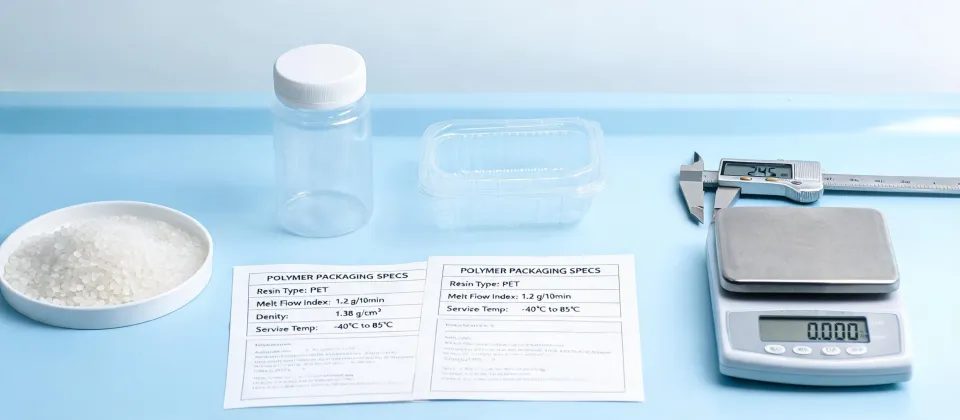
I'm a quality compliance manager for a mid-sized custom molder. I review every production run before it reaches a customer—roughly 200 unique items annually. In Q1 2024 alone, I rejected 12% of first deliveries due to material grade inconsistencies. So when someone asks me about choosing between a specialty resin and a commodity plastic, I don't just talk specs. I think about what actually survives production.
This article compares two common material categories: specialty plastics (like the polycarbonate used in high-end jsp mold applications or premium eyewear) and commodity plastics (like the general-purpose polypropylene used in many plastic ball toys or containers). I'm not a chemist, so I won't get into polymer synthesis. What I can tell you from a quality and real-world-durability perspective is where each category genuinely wins and loses.
The Comparison Framework: Specs, Cost, and Environment
We're comparing these two material categories across three critical dimensions. The first is specification accuracy and consistency—how well does the material hold to its published properties? The second is true production cost, not just resin price. The third is the often-ignored impact of material choice on plastic pollution and end-of-life fate.
The goal isn't to declare one category superior. The goal is to give you a clear decision framework based on your specific application, whether you're managing a jsp mold project or sourcing custom plastic ball components.
Dimension 1: Specification Accuracy and Consistency
Here's where the gap is widest. Specialty plastics, by their nature, are manufactured to tighter tolerances. They're sold with guaranteed property ranges—impact strength, UV resistance, thermal stability. Commodity plastics are often sold with a 'typical' range that can swing significantly between lots.
Why does this matter? I've seen it first-hand. We once received a shipment of polycarbonate for a jsp mold job—a transparent housing with specific optical clarity requirements. The material was supposed to be a UV-stabilized, high-flow grade for thin-wall molding. The shipment? A standard optical grade with no UV package. The vendor claimed 'it's basically the same.' We rejected it. That reorder cost $18,000, skipped the line, and taught me a lesson.
Real talk: The commodity plastic was cheaper. But it would have failed in the field within 18 months of UV exposure. The specialty grade cost 40% more per pound but delivered exactly what was specified. On a 10,000-unit run, that's a noticeable upfront cost difference—but a non-issue compared to a failed launch.
For a plastic ball application—say, a low-cost toy—commodity polypropylene is often fine. The spec tolerances are wider, and the performance demands are lower. The risk of a spec swing causing a failure is minimal. But for a precision jsp mold part? Specialty is the safer bet, and I'd argue it's the only responsible choice for mission-critical components.
Dimension 2: True Production Cost and Molding Efficiency
Everyone looks at the per-pound resin price. That's a mistake. The real cost is in the total production cycle: how fast it molds, how consistent the shrinkage is, how many rejects you get, and how often you clean the molds.
Specialty plastics are formulated for predictable processing. They have tighter melt flow index ranges and more consistent shrinkage rates. In a high-cavitation jsp mold (tooling with 8, 16, or 32 cavities), that consistency is gold. A mold that runs at 99.8% yield with a specialty grade might drop to 96% with a commodity grade. On a 50,000-unit annual order, that's 2,000 more rejects—scrap you pay for twice.
I've run that comparison. In Q3 2024, we tested a standard polypropylene vs. a slightly more expensive grade for a plastic ball component. The commodity resin was $0.85/lb; the specialty grade was $1.10/lb. But the reject rate dropped from 4.2% to 1.8%, and the cycle time decreased by 6% because the material packed more consistently (note to self: document this more formally). Net cost per part? Lower with the specialty grade.
So the conventional wisdom—'commodity is always cheaper'—isn't always true. It depends on your mold design, your run length, and your quality standards.
Dimension 3: Environmental Impact and Plastic Pollution
This is the dimension where the conversation is evolving fastest. Five years ago, nobody in procurement was asking about end-of-life. Now? Many of our clients require data on recyclability and environmental footprint.
The common assumption is that commodity plastics (like PP and PE) are more recyclable than specialty plastics (like PC or ABS blends). That's partially true. PP and PE have established recycling streams. Polycarbonate? Much less so. But it's not that simple.
Here's the thing: A plastic ball made from commodity polypropylene will likely end up in a general recycling bin (or landfill). A precision polycarbonate part from a jsp mold—a durable, long-life component—might never enter the waste stream at all if it's part of a larger product that gets reused or remanufactured. The longevity of the specialty part can offset its lower recyclability.
But there's a dark side. Specialty plastics, when they do enter the environment, can be more problematic. Polycarbonate, for example, is denser than water and doesn't float. It becomes part of the sediment load, contributing to plastic pollution in unique ways. The same high impact strength that makes it valuable in a jsp mold application makes it persistent as a pollutant.
So the 'industry in evolution' reality is this: old assumptions about 'green' materials need updating. A commodity plastic isn't automatically better for the environment. The full lifecycle—including part longevity, recyclability infrastructure, and eventual fate—needs to be considered.
Selection Guide: When to Choose What
Choose specialty plastics when:
- Your part has tight dimensional or optical specs (common in precision jsp mold jobs)
- Long-term reliability is critical and failure is expensive
- You have high-cavitation tooling that needs consistent material behavior
Choose commodity plastics when:
- Part performance demands are low and tolerances are wide (typical for simple plastic ball or non-critical packaging)
- Established recycling streams are a priority
- Your production volume is high enough that total cost analysis favors the cheaper resin
One final thought on polycarbonate glasses vs plastic (commodity acrylic or polyamide) lenses: it's the same trade-off. Polycarbonate offers impact resistance that no commodity plastic can match. For safety glasses? That's non-negotiable. For fashion frames? A commodity plastic might be perfectly adequate.
Prices as of early 2025. Commodity polypropylene was approximately $0.80-1.00/lb; specialty polycarbonate was $1.40-1.80/lb (source: Plastics News resin pricing, January 2025). Verify current pricing directly, as resin markets are volatile.
The bottom line? Don't let a per-pound price drive your material decision. The cost of a bad material choice—in rework, failed parts, and environmental impact—far outweighs the per-part savings. I've learned that the hard way. So has our customers who've had to scrap 8,000 units due to a material grade mismatch. Pick the material that matches the job, not the one that saves you a penny on paper.