JSP Buyer's Guide: What Is PP Plastic? A 5-Step Checklist for Plastic Flooring Buyers
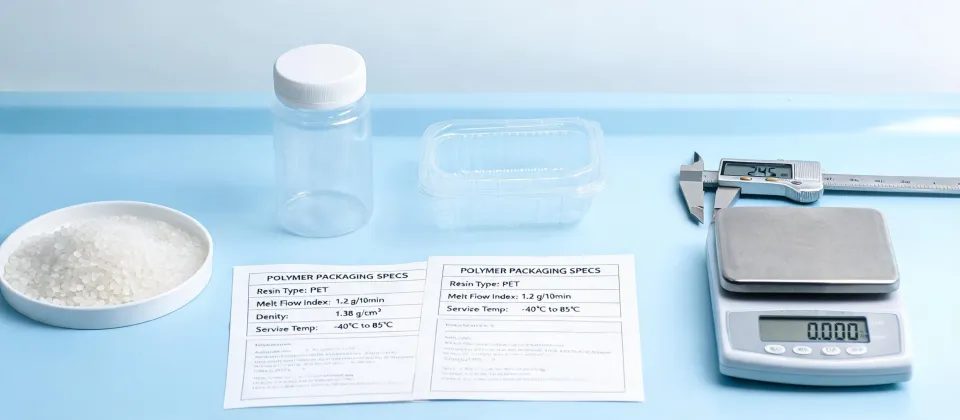
I run purchasing for a 160-person facilities and distribution company. The nameplate says office administrator, but I buy everything from printer cartridges to plastic replacement parts. Roughly $180,000 a year across six or seven vendors. Like a lot of admins, I became the de facto procurement person because nobody else was checking specifications.
Plastic ordering confused me for longer than I want to admit. The phrase plastic flooring can mean four different products. Plastic numbers — those little triangles with a 1 through 7 in them — tell you more than most buyers realize. And what is PP plastic? was a question I was too embarrassed to ask in a room full of engineers.
This is the checklist I use when someone puts a request on my desk for plastic flooring, industrial mats, bins, trays, aftermarket parts, or any custom-molded plastic product. It has five steps.
- Name the real application before looking at material.
- Find the plastic number.
- Check whether PP plastic fits that application.
- Look past the resin number.
- Verify with the JSP Store or JSP App before placing the order.
Step four is the one most people skip. I know because I skipped it for years.
Step 1: Name the actual use
If a facility manager asks for flooring, I ask a boring question: what will sit on it, and for how long?
A soft foam mat at a standing desk is not the same as a polypropylene interlocking tile in front of a workbench. A temporary floor protector used for renovations is different from a permanent plastic floor tile in a production area. Not the same product at all.
Why does this matter? Because the resin code only makes sense after you define the load, the environment, and the expected lifetime.
Do this in one sentence: 'I need [product] to withstand [condition] in [location] for [expected life].' That sentence will answer half of the material questions for you.
Step 2: Find the plastic number
Most plastic products made from one primary resin have a resin identification code. It is usually a triangle with a number on the bottom of the product, on the label, or on the technical data sheet. If you do not see one, ask for it before ordering.
According to ASTM International, these resin codes are standardized under ASTM D7611 (Source: ASTM D7611, astm.org). The code is not a guarantee that something is safe or recyclable. It simply identifies the polymer family. But that is still useful when you are comparing products by eye.
The quick version of the plastic numbers list:
- 1 (PET) — clear bottles, clear packaging. Not ideal for heavy repeated mechanical use.
- 2 (HDPE) — milk jugs, crates, tanks. Very common in durable industrial containers.
- 3 (PVC) — pipes, cable insulation, vinyl flooring. Flame resistant but often contains plasticizers.
- 4 (LDPE) — film, squeeze bottles, soft mats. More flexible and softer than HDPE.
- 5 (PP) — polypropylene. A go-to for bins, trays, car parts, and some plastic flooring tiles.
- 6 (PS) — disposable cups, foam packaging. Usually too brittle for structural products.
- 7 (Other) — polycarbonate, nylon, ABS, and blends. You need the full material name, not just 'other.'
For many purchasing decisions, I narrow it down to HDPE, PVC, LDPE, and PP. When a spec says PP, I pay attention because polypropylene has a useful balance of stiffness, chemical resistance, and fatigue life.
What is PP plastic? And is it the right material?
PP is polypropylene. It is a thermoplastic polymer made from propylene monomers. You probably own a hundred things made from it: storage bins, takeout containers with living hinges, battery cases, appliance parts, and garage floor tiles.
Why do manufacturers use PP in products like plastic flooring or replacement parts? Because it handles repeated stress well, absorbs very little water, resists many chemicals, and can be molded into fairly complex shapes. It is lighter than PVC, and it does not rely on plasticizers to soften the material. That makes PP attractive for interlocking floor tiles, industrial mats, and reusable totes.
But PP is not a miracle material. It can creep under constant load. Unmodified PP can fade and become brittle after long exposure to sunlight. Some grades are quite stiff; others are almost flexible. So if you ask 'what is PP plastic?', the honest answer is: a useful resin family, not a complete product specification.
Step 4: Look past the resin number
This is the step I warn every internal requester about. A resin code tells you the polymer family, not the formulation.
Two products can both be marked PP and behave completely differently because of what is inside them. A PP product may contain glass fibers, UV stabilizers, impact modifiers, flame retardants, colorants, or recycled content. Those additions change how it performs under load, heat, and sunlight.
In 2022, I compared two floor tiles that both claimed to be PP. The cheaper one had no datasheet. The product page simply said 'PP.' The other listed a drop-test result plus a UV stabilizer package. My gut said the cheap one might be fine for a small trial. The data side of my brain said: if the supplier is hiding the material sheet, the risk is not worth the savings. I asked for the datasheet anyway. It turned out to be a general-purpose polypropylene that would probably soften or deform in a hot environment. I ordered the other product.
To be fair, the supplier may not have been trying to mislead me. A generic 'PP' label is common in the market. But common does not mean good enough for a floor that has to hold up in a warm production area.
The lesson: once you know that number 5 means PP, ask for the full grade description. If the only material information is 'PP,' treat that as a red flag, not an answer.
Step 5: Verify on the JSP Store or JSP App before you order
Now the part that originally brought me to JSP. I need a catalog search that uses more than product names.
When I order from the JSP Store, I filter by material family, look at plastic numbers on the product pages, and open the technical sheet before I add anything to a cart. I also use the JSP App to compare two or three SKUs. The app helps when I am standing on a warehouse floor with a tape measure in one hand and a failing part in the other. I can search the exact product code, confirm the material, and make a more informed decision in about five minutes.
If you are not using the JSP Store, that is fine. Use whatever system your supplier offers, but make it answer four things:
- What resin is it?
- What is the exact grade or compound?
- Where is the technical data sheet?
- Does the supplier stand behind the material with traceable product specs?
Those four answers have saved me from more bad purchases than any discount code ever did.
What still goes wrong
I still kick myself over one bulk order from a couple of years ago. The supplier sent a sample that looked like polypropylene, but the invoice did not list the resin code. I approved the order anyway because the price was 18 percent lower than the alternative. Six weeks later, the edge of the tile cracked and curled. The cost of replacing it wiped out the savings. A lesson learned the hard way.
Looking back, I should have sent the sample to a local testing lab or simply made the supplier certify the resin in writing. At the time, I did not want to look difficult. Now I would rather be the annoying buyer who asks for a datasheet than the admin who explains why a second order is needed.
Three mistakes I try to avoid:
- Treating 'plastic number 5' as proof of quality instead of just the material family.
- Buying PP for an application that needs UV- or impact-modified PP and skipping the additives check.
- Choosing plastic flooring based on photos and price without checking the load rating and chemical exposure.
Bottom line
Plastic numbers are not a secret code. They are a starting point. If you know your actual use, know the resin family, and verify the full material specification before you order, you will make fewer expensive mistakes.
An informed customer also makes a better customer. When I call a supplier and ask whether the material is PP homopolymer or a filled copolymer, the conversation changes. They stop treating me like someone who just needs a cheap quote and start answering technical questions. That is what I want from any plastic purchase — not a guessing game, but a spec I can trust.
That keeps my internal customers happy, which is the part nobody puts in the job description.