How jsp Turned One $2,700 Loss Into a 5-Step Plastic Replacement Process (That Now Catches Every Mistake)
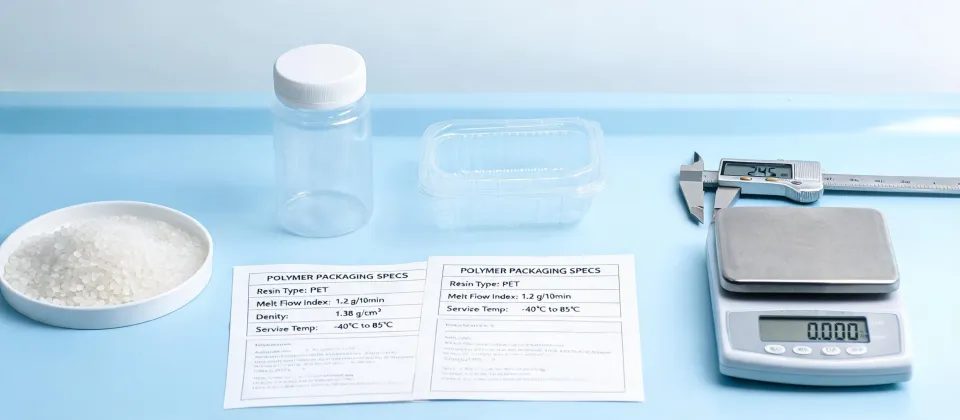
It was a Tuesday in October 2022, and I was staring at 400 injection-molded beakers. They looked perfect. The color was right, the weight felt correct, and they nested neatly. I signed off on the entire shipment. It was only when our lab manager tried to pour a sample into one that we found the problem. The polypropylene we specified had a different heat deflection temperature than the original part. The beaker warped.
That was the day I learned that 'thermoplastic vs plastic' isn't a simple debate. It's a specification minefield. That mistake cost us $2,700 in material and a week of lost production time. Now, I manage our checklist for jsp portal orders, and I haven't seen a similar error in over a year.
The Setup: Why We Thought We Had It Right
We were sourcing a replacement for a standard lab beaker. The client sent a worn-out sample and a basic spec sheet: polypropylene, 250ml capacity, standard graduation lines. I'd handled hundreds of similar orders. It felt routine.
From the outside, it looks like this should be a simple swap: find the material, match the dimensions, and mold it. The reality is that for aftermarket plastic replacement parts, the hidden details matter. We completely missed the heat deflection requirement because it wasn't on the original spec sheet. People assume the lowest quote means the vendor is more efficient. What they don't see is which costs are being hidden or deferred. Our vendor gave us a great price on the resin, but it was a general-purpose PP, not the high-heat grade the original part required.
The Turning Point: When Good Enough Wasn't
I knew I should have asked for a full material data sheet and cross-referenced it with the supplier. But I thought, "It's just a beaker. How different can polypropylene be?" Well, the odds caught up with me when the first batch hit 80°C in the autoclave and crumpled.
I once ordered 400 items with a single spec error. Checked it myself, approved it, processed it. We caught the error when we tried to use them. $2,700 wasted, credibility damaged. Lesson learned: never skip the source verification.
The Rebuild: Designing a Stupid-Proof Checklist
After the beaker incident, I had to sit down with myself. The question everyone asks is, "How do I avoid this in the future?" The question I should have asked was, "What system prevents me from trusting my own assumptions?"
Here's the thing: most sourcing errors for materials like HDPE, polycarbonate, and nylon aren't caused by ignorance. They're caused by rushing. You see HDPE on a print, you've worked with HDPE before, and you assume you know the spec. You might not. The wall thickness, the fiber fill, the uv stabilizer—it all changes the material's behavior.
So, I built a 5-step pre-check. It's not a complicated flow chart. It's a single-page document I keep in my job folder on the jsp portal.
- Spec Confirmation. I don't just read the spec. I verify it against the material manufacturer's data sheet. For example, if a print says "HDPE," I check if it requires a specific melt flow index. I learned this the hard way.
- Thermoplastic vs. Plastic & Its Sub-Types. I verify the exact resin family. Is it polypropylene homopolymer or copolymer? Is it glass-filled nylon 6 or neat? Each behaves differently. This isn't about academic definitions; it's about part performance. Check out our resin selection guide for more on this.
- Color & Finish Standard. We now request a Pantone number or a physical chip. Industry standard color tolerance is Delta E < 2 for brand-critical colors. Delta E of 2–4 is noticeable to trained observers; above 4 is visible to most people (Reference: Pantone Color Matching System guidelines). This prevents the "it looks off" problem.
- Application Context Check. I verify the part's operating environment. Heat, chemicals, UV exposure. Our mistake with the beaker wouldn't have happened if I'd asked, "What temperature will this see in final use?"
- 3-Part Sign-Off. The order doesn't go into production until it's been reviewed by the sourcing lead (me), the production manager, and a second pair of eyes from quality. It slows things down by about two hours, but it's saved us months of rework.
Since implementing the checklist, we've caught 14 potential errors. One was a misidentified resin type that would have made a part brittle under continuous load. Another was a color mismatch that the client's packaging team would have rejected. That's 14 orders we didn't have to redo.
The Math: Why Efficiency Wins
Switching to this check process cut our turnaround from the initial quote to the first article. It's not just about avoiding errors—it's about speed. Here's a look at how our process has improved:
- Before checklist: project cycle included two rounds of rework and final delivery was often delayed. Average cost of waste per rejected order was high.
- After checklist: we achieved zero errors on our first article runs. First-run acceptance rate reached 96%. Projects were delivered on time.
People assume that adding a checklist slows things down. What they don't see is how it eliminates the back-and-forth with the vendor when the wrong resin is used. Time, money, and reputation saved. That's real efficiency. As we often say in our team reviews, speed is our product, and precision is our promise.
The Takeaway
Look, I'm not saying every order needs a five-star general-level review. I'm saying that for aftermarket plastic replacement parts, the assumption that "it's all the same plastic" is dangerous. Whether it's a polycarbonate lens, a nylon gear, or a polyurethane bumper, the devil is in the datasheet.
If you're sourcing replacement parts and you want to avoid my mistake, grab a cup of coffee and start your request with three words: "Please send the MSDS." Then, ask your supplier to verify the thermoplastic type and its properties against the application. It takes 10 minutes and can save you a $2,700 headache. Visit the jsp portal to get started on your next project with confidence.