Aftermarket Plastic Replacement vs. OEM Parts: What I Learned as an Admin Buyer
My official title is "office administrator." What that actually means: I'm the person who buys everything from breakroom coffee to injection-molded components, maintains 8 separate vendor relationships, and processes roughly 70 orders a year—about $85K in annual purchasing. I report to both operations and finance, which is another way of saying every purchase decision gets examined from at least two angles.
When our maintenance lead came to me in early 2024 about replacing worn plastic components on our packaging line, I assumed we'd order OEM parts and move on. Then the quotes came back: $23,410 for 12 parts. Our budget for the quarter was $15K. That's when I started seriously looking at jsp's aftermarket plastic replacement offering, which kept surfacing in my research. What followed was a four-dimension comparison that changed how I source replacement parts.
Why This Comparison Matters
If you're a buyer facing a similar choice, you need a framework. The decision isn't just "which part is cheaper"—it's a total-cost-of-ownership (i.e., unit price, shipping, installation labor, and failure risk) comparison across four dimensions:
- Cost — actual price, not the quote
- Material quality — resin specs, not "it's plastic"
- Fit — does it work without modification?
- Lead time — how fast can it reach your dock?
The essential difference: OEM parts come from the original manufacturer—guaranteed fit, premium price. Aftermarket parts come from specialized manufacturers like jsp who reverse-engineer or independently spec compatible components. Both solve the same problem; what you're really choosing between is certainty and economy.
Dimension 1: Cost
The headline numbers: OEM quoted $23,410. Aftermarket (jsp) quoted $14,800. That's a 37% gap—or $8,610 in savings for one production line. The math is easy; the decision is harder.
It's tempting to think you can just compare unit prices and call it a day. But identical specs from different vendors can result in wildly different outcomes. We factored in shipping discrepancies, potential installation adjustments, and the risk of a failure-related line stoppage (which costs us roughly $1,800 per hour in idle labor—our ops manager calculated that during the 2023 supply chain disruptions). Even with those risk adjustments, aftermarket came out 30–35% cheaper.
Conclusion: Aftermarket wins on cost, even when you account for risk.
Dimension 2: Material Quality
Here's where I had to confront my own bias. I assumed "aftermarket" meant "inferior materials that meet the minimum spec." The data said otherwise.
Yes, polycarbonate is a plastic. It's an amorphous thermoplastic known for impact resistance and optical clarity, which is why it's used in machine guards, glazing, and structural covers. FRP resin—fiber-reinforced plastic resin—is a different family entirely: a composite of polymer resin reinforced with glass or carbon fiber, chosen for corrosion resistance and high strength-to-weight ratios. They're not interchangeable, and neither is universally "better."
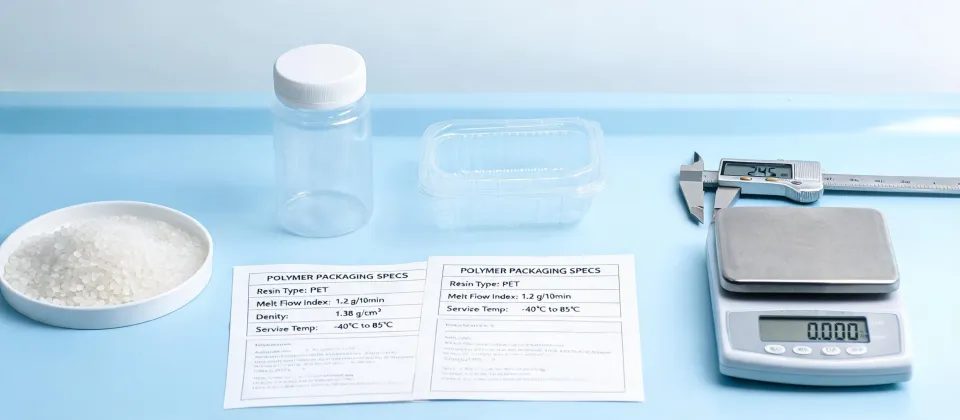
Our OEM guide rails were molded from standard polycarbonate. The aftermarket replacement from jsp specified a UV-stabilized polycarbonate blend with higher molecular weight—which translates to better impact resistance and longer outdoor life if the part ever sees sunlight. We received the material data sheet before purchase, and the numbers held up.
Let me be clear: this is one data point, not a universal rule. But in our case, the aftermarket component was technically superior to the original. I didn't expect that.
Conclusion: Aftermarket won on materials—the opposite of what I assumed.
A Note About "Plastic Trash"
While researching this, I also had to think about plastic in a different context: our facility's plastic trash receptacles. We have dozens of industrial-grade bins on the production floor, and their polypropylene wheels and lids wear out from continuous use. OEM wanted $36 per wheel assembly. The aftermarket equivalent was $14.50, spec-matched (impact-modified polypropylene, same load rating). We've had them in service since August 2024 without an issue.
The "plastic trash" misconception is that all plastic components are commodity items—generic pieces of plastic you can swap with anything. In reality, material spec matters. A wheel molded from unreinforced polypropylene won't hold up to forklift traffic; one molded from impact-modified polypropylene with a steel insert (which is what the aftermarket version used) will. The same logic applies to industrial replacement parts: know what your plastic is before you buy a replacement for it.
Dimension 3: Fit and Installation
OEM wins here. I'm not going to sugarcoat it.
Of the 12 aftermarket components we ordered, 11 installed without issues. The 12th—a thermoformed cover panel—needed slight trimming around two bolt holes because the aftermarket tolerance stack-up was a bit different from OEM. Our maintenance tech fixed it in about 15 minutes, but the point stands: OEM parts fit perfectly, aftermarket parts sometimes ask you to adapt.
The "always go aftermarket" advice ignores this nuance. If your facility has minimal in-house mechanical capability, the premium for guaranteed fit is worth every dollar.
Conclusion: OEM wins on fit, by a small margin in our case.
Dimension 4: Lead Time
OEM quoted 6–8 weeks. In a production environment, that's not a delay—it's a shutdown risk.
jsp quoted 2–3 weeks for custom-molded parts and about 5 business days for stocked items. Their actual deliveries matched those commitments, which matters more than you'd think. A quick tip for their customers: if you've been searching "login jsp" to find the ordering portal, it's linked from the top-right of their site—it took me a few minutes to locate it on our first order. Once in, order tracking was straightforward and saved our accounting team roughly 4 hours per month in follow-up emails compared to the OEM's sales-rep process.
Conclusion: Aftermarket wins on lead time by a wide margin.
The Honest In-Between: Second-Guessing
I went back and forth between OEM and aftermarket for two weeks in April. OEM felt safe; aftermarket felt smart. On paper, aftermarket made sense. But my gut kept coming back to one fear: if a replacement part fails on my watch, "we saved 37%" doesn't excuse a production stoppage.
I still kick myself for not requesting material data sheets back in February. If I'd done that earlier, the two-week deliberation would have been unnecessary—and we'd have avoided running slightly worn equipment longer than needed while I dithered.
What actually got me off the fence: jsp offered a 30-day pilot on a single component. No minimum order, no contract—just "install this and measure." We agreed, put the part on our highest-wear position, and checked it weekly. After 30 days, the pilot part showed less wear than the OEM control part. Decision made.
When to Choose OEM vs. Aftermarket
Based on this procurement cycle, here's the scenario-based guidance I'd offer:
Stay with OEM when:
- The part is safety-critical with tight tolerances
- Equipment is under warranty (verify whether aftermarket parts void it)
- Your maintenance team can't handle small adjustments
- You have lead time to spare
Look at aftermarket when:
- Cost is a priority (expect 30–45% savings with comparable specs)
- OEM lead times risk your production schedule
- The part is a wear item (wheels, covers, guides, lids)
- The vendor shares material data and is honest about limitations
On that last point: the aftermarket vendor we worked with flat-out said one of their parts wasn't suitable for a high-tolerance pneumatic application and recommended we stay with OEM for that component. A vendor who admits "we're not the right fit here" earns credibility everywhere else. That's their expertise boundary, and it's a green flag.
Bottom Line
The OEM vs. aftermarket plastic replacement decision isn't "which is better"—it's "which is better for this part, in this machine, at this moment." For our facility, aftermarket delivered roughly $12,000 in documented savings across 20 components in 2024. But it wasn't the right answer for every component.
My advice, boiled down:
- Request material data sheets up front—don't assume "aftermarket" means inferior.
- Ask for a pilot. Vendors who offer one are confident in their product.
- Listen for how honestly a vendor describes their own limitations.
- Calculate total cost of ownership, not unit price.
And if you're searching "is polycarbonate a plastic" while trying to source a replacement part—yes, it is. But the question that matters is whether the replacement's material spec actually fits the application, whether that's polycarbonate, FRP resin, or something else entirely.
Prices and lead times reflect quotes from Q1–Q3 2024. Verify current rates with your vendors; pricing changes.